In this article
- What Determines the Duration of a Commercial Surfacing Project?
- How Long Does Each Stage of a Commercial Surfacing Project Take?
- Stage 1: Site Survey and Assessment
- Stage 2: Planning and Project Preparation
- Stage 3: Ground Preparation and Excavation Work
- Stage 4: Drainage Installation and Improvements
- Stage 5: Surfacing Installation
- Stage 6: Line Marking and Final Works
- Typical Timescales for Different Commercial Surfacing Projects
- How Weather Conditions Affect Commercial Surfacing Timelines
- How Site Access Affects Commercial Surfacing Project Duration
- How Businesses Can Reduce Disruption During Surfacing Work
- Why Preparation Work Often Takes Longer Than Surfacing Installation
- Commercial Surfacing Project Timeline: Repairs, Resurfacing and New Construction
- How Contractors Create an Accurate Surfacing Schedule
- Why Choosing an Experienced Commercial Surfacing Contractor Matters
- Commercial Surfacing Project Planning Checklist
- Frequently Asked Questions About Commercial Surfacing Project Duration
- Final Thoughts
A commercial surfacing project can take anywhere from a few days to several weeks depending on the size of the site, preparation requirements, drainage conditions, materials used, and how the area will be used after completion.
Businesses often want to know the expected timeframe before starting a surfacing project because external areas such as car parks, access roads, loading areas, and industrial yards are essential for daily operations. Understanding the process helps property owners and facilities managers plan around construction work while reducing disruption.
The timeline for a commercial surfacing project is not determined only by the installation of the final surface. A successful project involves several stages, including site assessment, planning, preparation, groundwork, drainage improvements, surfacing installation, and finishing work.
A professional commercial surfacing contractor will assess the site conditions before providing a realistic programme. This ensures the proposed schedule considers all factors that could affect completion.
What Determines the Duration of a Commercial Surfacing Project?
The time required to complete commercial surfacing depends on several project specific factors. No two sites are identical, and the condition of the existing area plays a major role in determining the schedule.
The main factors affecting project duration include:
- Size of the area being surfaced
• Existing surface condition
• Amount of preparation required
• Drainage requirements
• Ground conditions
• Choice of surfacing material
• Weather conditions
• Access restrictions
• Traffic management requirements
• Additional features such as line markings
A small commercial area with good existing foundations may only require limited preparation, while a large industrial site with drainage issues and damaged foundations may require more extensive work.
How Long Does Each Stage of a Commercial Surfacing Project Take?
A commercial surfacing project is completed through several stages. Each stage contributes to the final quality and durability of the finished surface.
Stage 1: Site Survey and Assessment
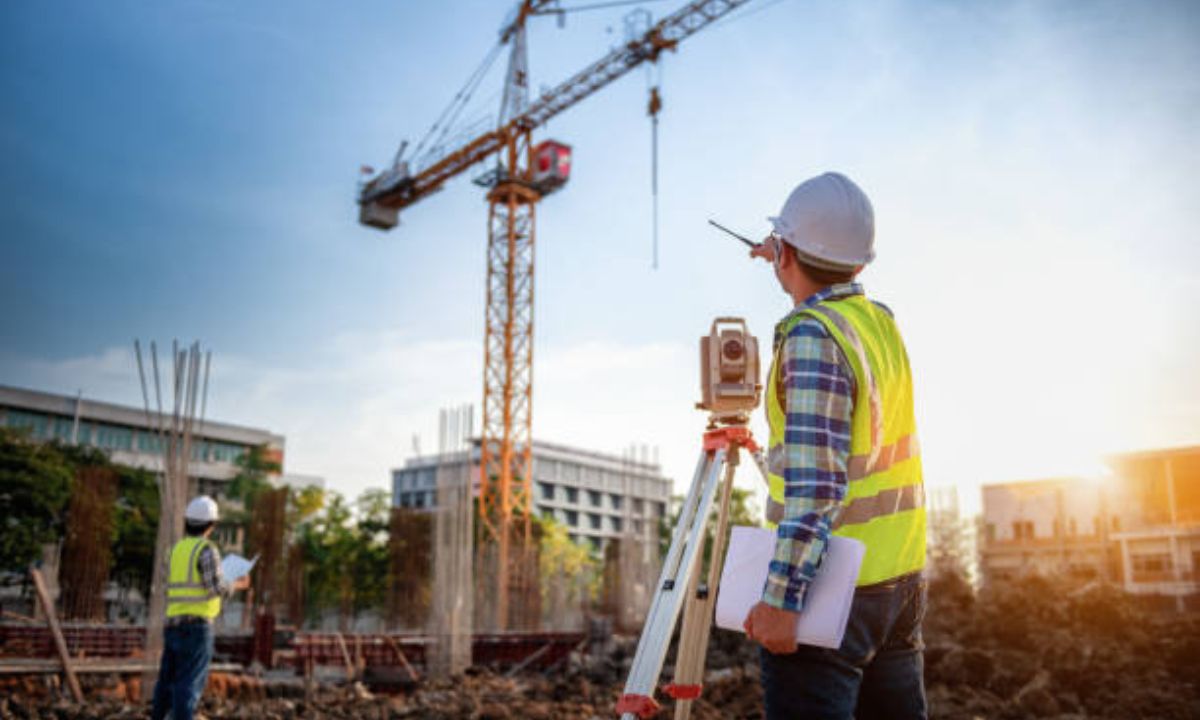
Before construction begins, contractors carry out a detailed site survey. This stage allows them to understand the existing condition of the area and identify any issues that could affect the project.
During a commercial surfacing survey, contractors assess:
- Existing surface damage
• Ground stability
• Drainage performance
• Access requirements
• Traffic usage
• Required preparation work
The survey may take from a few hours for smaller sites to several days for larger or more complex projects.
This stage is important because accurate planning reduces delays during construction. Problems such as weak ground conditions or drainage failures can be identified before work begins.
Batten Ltd provides commercial surfacing assessments designed around the specific requirements of each project, combining knowledge of surfacing, groundwork, drainage, and civil engineering. Businesses can explore their commercial surfacing services for more information.
Stage 2: Planning and Project Preparation
After the survey is completed, contractors prepare a project plan. This includes selecting suitable materials, organising machinery, arranging labour, and planning how the work will be completed.
For commercial sites, planning is especially important because businesses often need to continue operating during construction.
Preparation may include:
- Agreeing working hours
• Planning vehicle access routes
• Arranging traffic management
• Scheduling material deliveries
• Creating phased work plans
For example, a busy commercial car park may need to be completed in sections so that some areas remain available for customers and employees.
The planning stage can vary depending on project complexity but is essential for preventing unnecessary delays.
Stage 3: Ground Preparation and Excavation Work
Ground preparation is one of the most important stages of any commercial surfacing project. The condition of the layers beneath the surface determines how well the finished area performs.
Preparation work may include:
- Removing damaged surface materials
• Excavating unsuitable areas
• Improving weak foundations
• Installing or improving drainage
• Levelling the surface area
• Preparing the sub base
A surface installed over poor foundations may fail prematurely, even if high quality materials are used.
The time required for preparation depends on the existing site condition. A simple resurfacing project may require limited preparation, while a new construction project may involve extensive groundwork.
Batten Ltd also provides groundwork services that support commercial surfacing projects where foundation improvements or site preparation are required.
Stage 4: Drainage Installation and Improvements
Drainage is a critical part of commercial surfacing projects. Poor water management can reduce surface lifespan and create maintenance problems.
During construction, drainage work may include:
- Installing new drainage channels
• Repairing existing systems
• Adjusting surface levels
• Improving water flow routes
• Creating suitable falls for drainage
The time required depends on the complexity of the drainage system and the condition of existing infrastructure.
Projects with effective existing drainage may require little additional work, while sites with standing water problems may require significant improvements before surfacing can begin.
Guidance on sustainable drainage approaches and managing surface water is available through GOV.UK Sustainable drainage systems guidance.
Stage 5: Surfacing Installation
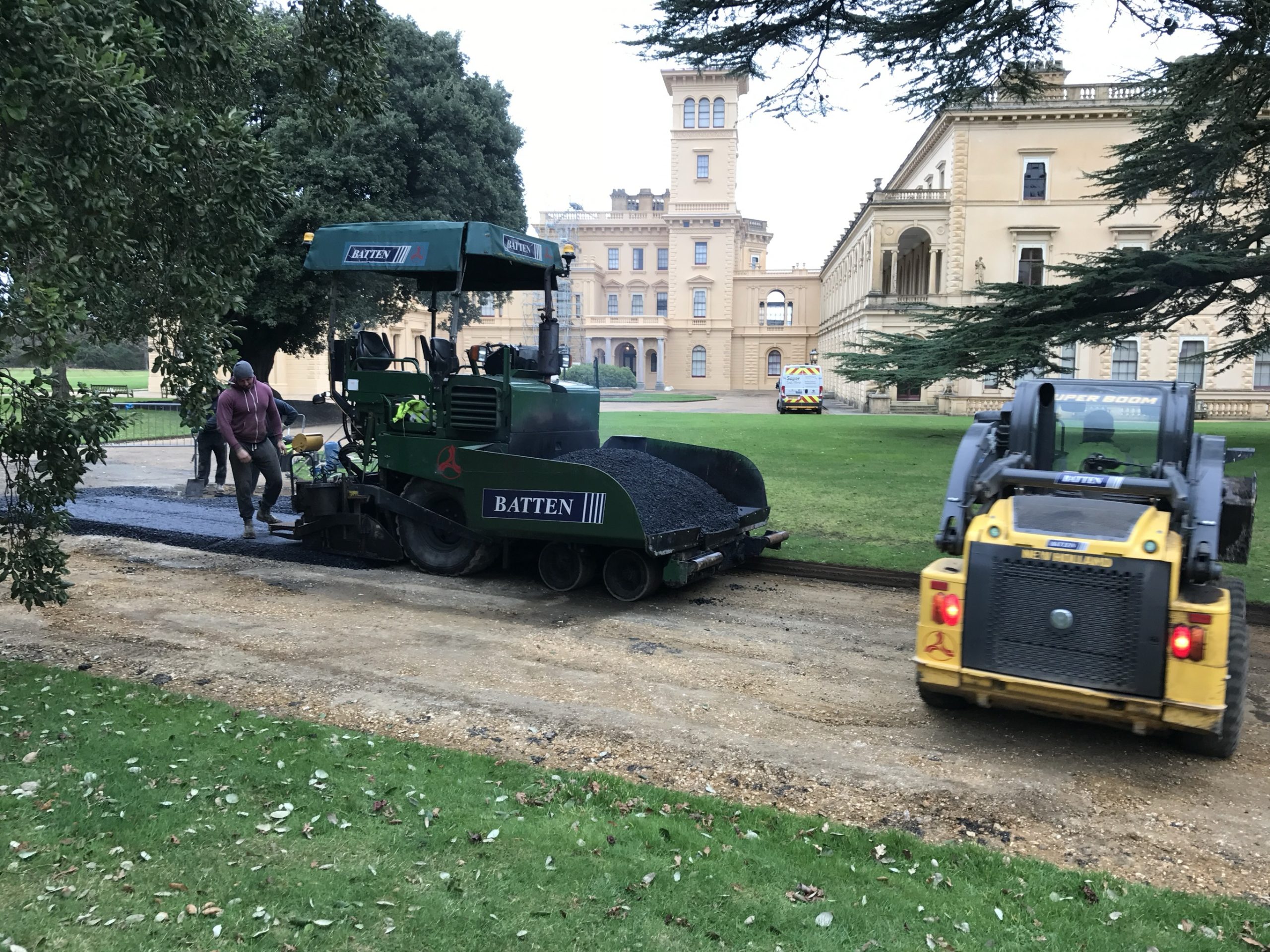
Once preparation work is complete, the main surfacing installation can begin.
The duration depends on:
- Surface area size
• Material selected
• Site access
• Weather conditions
• Number of working teams available
Commercial surfacing materials may include:
- Tarmac
• Asphalt
• Resin bound surfacing
• Specialist surface systems
A small resurfacing project may be completed within a few days, while larger commercial roads, car parks, or industrial areas may require several weeks.
The installation stage must be completed carefully to ensure the surface achieves the required strength, appearance, and durability.
Stage 6: Line Marking and Final Works
After the surfacing has been installed, final details can be completed.
These may include:
- Car park bay markings
• Directional arrows
• Safety zones
• Pedestrian walkways
• Accessibility markings
Line marking improves organisation, safety, and traffic flow within commercial spaces.
The timing depends on the size of the area and the complexity of the layout. Simple markings may be completed quickly, while larger commercial sites require detailed planning.
Businesses can review Batten Ltd’s approach to commercial layouts and finishing solutions through their line marking services.
Typical Timescales for Different Commercial Surfacing Projects
Although every project is different, typical timelines can vary based on the type of work required.
Small Commercial Car Park Resurfacing
A small car park with good existing foundations may take several days, including preparation and finishing work.
Large Commercial Car Parks
Larger car parks often require additional planning, traffic management, drainage assessment, and phased construction. These projects may take several weeks.
Industrial Yard Surfacing
Industrial areas often require stronger construction methods due to heavy vehicle use. Preparation requirements can increase the project duration.
New Access Roads
New road construction usually involves extensive groundwork, drainage, foundation preparation, and surfacing installation, making it a longer process compared with resurfacing.
How Weather Conditions Affect Commercial Surfacing Timelines
Weather is one of the external factors that can influence the duration of a commercial surfacing project. Contractors plan projects carefully around expected conditions because temperature, rainfall, and ground moisture can affect preparation and installation.
Certain weather conditions may slow progress, including:
• Heavy rainfall
• Frost or freezing temperatures
• Excessive moisture in the ground
• Extreme temperatures
Rain can affect excavation work, drainage installation, and surface preparation by making ground conditions unsuitable. Surfacing materials also require appropriate conditions to achieve the correct finish and performance.
Experienced contractors consider weather forecasts during project planning and adjust schedules when necessary to protect the quality of the finished surface.
Delaying a project slightly due to unsuitable conditions is often better than installing materials in conditions that could affect long term durability.
How Site Access Affects Commercial Surfacing Project Duration
Access is an important factor that influences how quickly a commercial surfacing project can be completed.
Before work begins, contractors assess:
• Entry points for machinery
• Space for equipment movement
• Material delivery routes
• Areas available for temporary storage
• Restrictions around buildings or neighbouring properties
Limited access can require additional planning or alternative construction methods.
For example, a large industrial site may have sufficient space for machinery and materials, allowing work to progress efficiently. A smaller commercial property may require more careful scheduling to manage limited working areas.
A detailed site survey helps identify these challenges before construction starts.
How Businesses Can Reduce Disruption During Surfacing Work
Commercial properties often need to remain operational while surfacing improvements are completed. Good planning helps minimise disruption to customers, employees, deliveries, and daily operations.
Businesses can help reduce delays by:
• Providing access information before work begins
• Informing contractors about busy periods
• Planning alternative parking arrangements
• Communicating restrictions with site users
• Agreeing phased construction where required
A professional contractor will work with the business to create a practical schedule.
For example, a commercial car park may be completed section by section rather than closing the entire area. This approach allows parts of the site to remain available while improvements are carried out.
Why Preparation Work Often Takes Longer Than Surfacing Installation
Many people assume that laying the final surface is the longest part of a commercial surfacing project. In reality, preparation work often requires the most planning and time.
The final surface depends on the condition of the layers beneath it. If the foundation is weak or drainage problems exist, these issues must be corrected before installation.
Preparation may involve:
• Removing failed sections
• Improving sub base materials
• Repairing drainage systems
• Adjusting levels
• Compacting foundation layers
Completing these steps properly prevents early surface failure.
A faster installation with poor preparation can result in higher maintenance costs in the future.
Commercial Surfacing Project Timeline: Repairs, Resurfacing and New Construction
The duration of a project depends heavily on whether the work involves repairs, resurfacing, or complete construction.
Commercial Surface Repairs
Repairs are usually the quickest option because they involve smaller areas of damage.
They may include:
• Pothole repairs
• Crack repairs
• Local patching
Repair projects can often be completed within a short timeframe if no underlying issues are found.
Commercial Resurfacing
Resurfacing involves improving a larger area by applying a new surface layer over a prepared base.
The process usually includes:
• Survey
• Preparation
• Surface installation
• Finishing work
The timeframe depends on the size and complexity of the site.
New Commercial Surface Construction
New roads, car parks, and industrial areas require more extensive work.
These projects may involve:
• Excavation
• Ground improvement
• Drainage installation
• Foundation construction
• Surfacing
New construction generally requires the longest timeframe because the entire structure is created from the ground up.
How Contractors Create an Accurate Surfacing Schedule
A reliable commercial surfacing contractor does not provide a timeline based only on the size of the surface area. They consider all elements that influence completion.
A project schedule may include:
Survey Completion
Understanding the existing site condition.
Preparation Planning
Identifying groundwork and drainage requirements.
Material Selection
Choosing suitable materials based on usage and performance needs.
Construction Programme
Organising labour, machinery, and site access.
Final Inspection
Checking quality before the area returns to normal use.
This structured approach helps businesses understand what happens at each stage of the project.
Why Choosing an Experienced Commercial Surfacing Contractor Matters
The quality and efficiency of a surfacing project depend heavily on contractor experience.
An experienced contractor understands how to:
• Assess site conditions accurately
• Identify potential problems early
• Plan around commercial operations
• Select appropriate materials
• Complete preparation correctly
Poor planning can create delays, additional costs, and surface problems after completion.
Batten Ltd combines commercial surfacing knowledge with groundwork and civil engineering experience, allowing projects to be approached as complete solutions rather than isolated surface installations.
Their experience includes road surfacing, car parks, groundwork, drainage, and associated construction works.
Businesses can explore their road and car park surfacing services to understand the range of commercial solutions available.
Commercial Surfacing Project Planning Checklist
Before starting a surfacing project, businesses should consider:
1. Identify the Main Problem
Determine whether the issue is surface damage, drainage failure, access problems, or general deterioration.
2. Arrange a Professional Survey
A site assessment helps identify the correct solution and expected timeframe.
3. Consider Business Operations
Plan how customers, employees, and deliveries will access the site during construction.
4. Review Drainage Requirements
Ensure water management is considered before new surfacing is installed.
5. Discuss Maintenance Requirements
Understand how the surface should be maintained after completion.
A clear plan improves efficiency and reduces unexpected delays.
Frequently Asked Questions About Commercial Surfacing Project Duration
How long does a commercial surfacing project usually take?
The timeframe depends on the size of the project, preparation requirements, drainage conditions, materials used, and site access. Smaller projects may take a few days, while larger commercial developments can take several weeks.
How long does car park resurfacing take?
Car park resurfacing can range from several days for smaller areas to several weeks for larger commercial sites requiring preparation, drainage improvements, or phased construction.
Can commercial surfacing work be completed while a business remains open?
Yes. Many projects can be planned in phases to reduce disruption. Contractors can organise work around business operations, access requirements, and customer movement.
Does poor ground condition increase project time?
Yes. Weak foundations or drainage problems require additional preparation before surfacing installation. Addressing these issues improves long term surface performance.
Does weather delay commercial surfacing projects?
Weather can affect construction schedules, especially when conditions prevent safe preparation or proper installation. Contractors monitor conditions and adjust programmes when necessary.
Final Thoughts
The time required for a commercial surfacing project depends on much more than the size of the area being improved. A successful project requires careful assessment, preparation, drainage planning, quality installation, and final finishing work.
Small repairs may be completed quickly, but larger resurfacing and construction projects require detailed planning to achieve long term results.
Businesses should work with experienced surfacing contractors who understand the importance of minimising disruption while delivering a durable solution.
A professional site assessment provides the information needed to create an accurate timeline and ensure the completed surface meets the demands of daily commercial use.
Share