In this article
- Planning a Car Park Resurfacing Project Around Daily Operations
- What Is Phased Car Park Resurfacing?
- How Contractors Maintain Access During Resurfacing
- Choosing the Right Resurfacing Method for Minimum Disruption
- Preparing the Site Without Closing Everything
- Scheduling Work to Reduce Business Disruption
- How Long Does Car Park Resurfacing Take?
- Managing Vehicle Movement During Construction
- Why Businesses Should Avoid Delaying Car Park Repairs
- The Role of Drainage in Car Park Resurfacing
- Safety Considerations During Active Car Park Resurfacing
- How Commercial Clients Benefit From Phased Resurfacing
- Working With an Experienced Local Surfacing Contractor
- How Technology and Modern Equipment Help Reduce Disruption
- Can a Car Park Be Resurfaced During Business Hours?
- How Businesses Should Prepare Before Resurfacing Starts
- Common Mistakes When Planning Car Park Resurfacing
- What Questions Should You Ask a Car Park Resurfacing Contractor?
- Internal Links for Related Construction Services
- Frequently Asked Questions
- Final Thoughts
A damaged car park can quickly become a problem for businesses, customers, employees, and visitors. Cracks, potholes, uneven surfaces, standing water, and worn areas do not only affect appearance; they can create safety risks and reduce the lifespan of the surface if repairs are delayed. However, many businesses avoid resurfacing projects because they assume the entire car park must be closed for several days or even weeks.
In reality, professional contractors can often resurface a car park while allowing the site to continue operating. Through careful planning, phased construction, temporary traffic management, and efficient working methods, businesses can maintain access while essential surfacing improvements are completed.
For commercial sites such as offices, retail parks, industrial units, schools, healthcare facilities, and public areas, keeping operations running is often a priority. A well-managed resurfacing project focuses on reducing disruption while delivering a durable and safe finished surface.
Planning a Car Park Resurfacing Project Around Daily Operations
The first step in resurfacing an active car park is detailed planning. Contractors need to understand how the site is used throughout the day, including peak traffic times, delivery schedules, pedestrian routes, emergency access requirements, and customer movement patterns.
Before work begins, a professional contractor will normally inspect the existing surface to identify the condition of the asphalt, tarmac, concrete, drainage systems, and surrounding areas. This assessment helps determine whether the site requires full resurfacing, partial repairs, patching, drainage improvements, or additional groundwork.
A carefully prepared plan allows contractors to divide the work into manageable sections instead of closing the entire area. This approach is known as phased resurfacing.
What Is Phased Car Park Resurfacing?
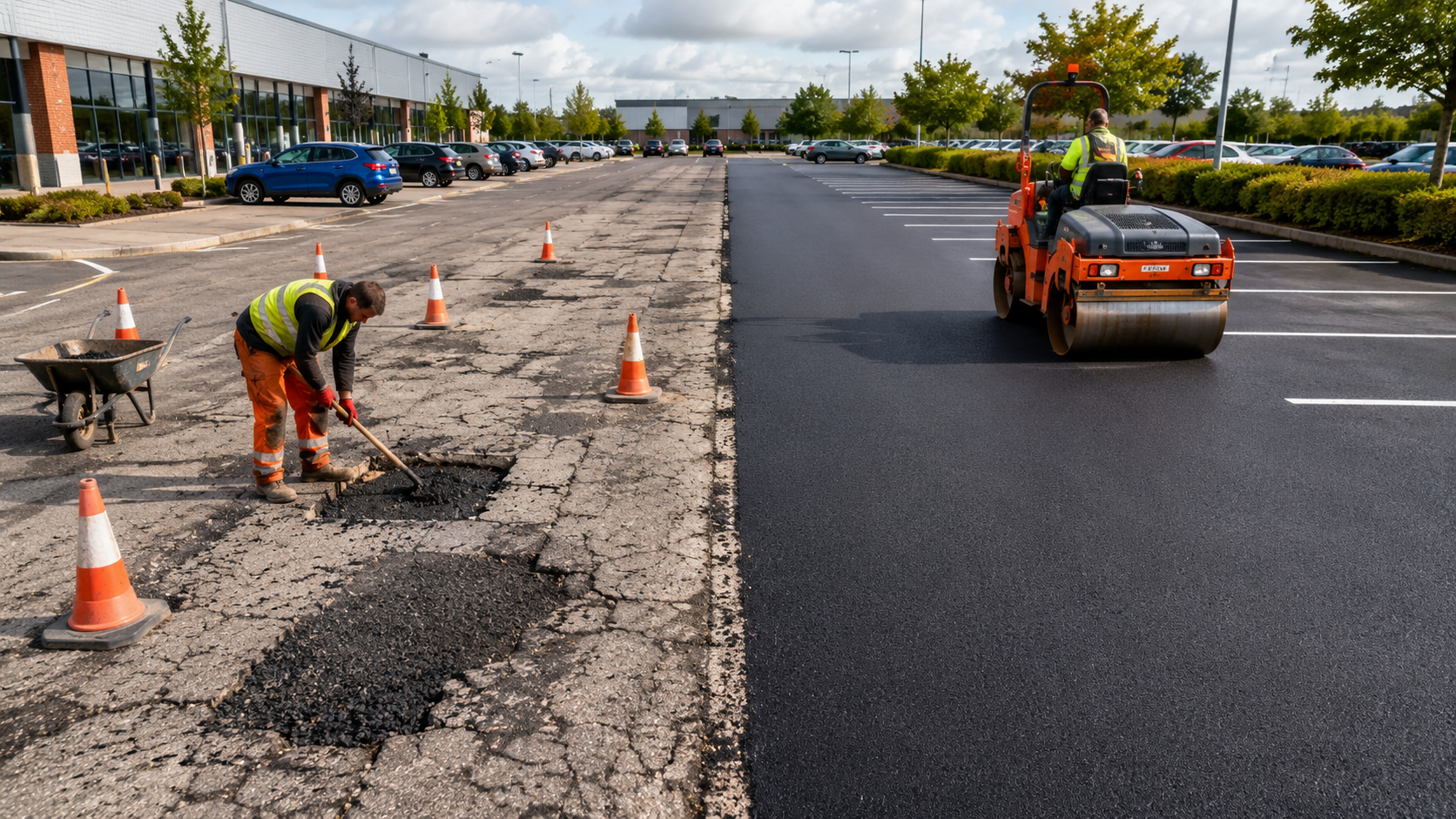
Phased resurfacing means completing the project in separate sections while keeping unaffected areas open for use. Instead of removing and replacing the entire car park at once, contractors work on one area at a time.
For example, a large commercial car park may be divided into:
- Entrance and exit areas
- Customer parking zones
- Staff parking areas
- Loading and delivery sections
- Walkways and pedestrian routes
During each phase, traffic can be redirected to completed sections while construction continues elsewhere.
This method is particularly effective for businesses that cannot completely stop operations. A supermarket, office building, industrial facility, or public venue can continue functioning while improvements are carried out.
How Contractors Maintain Access During Resurfacing
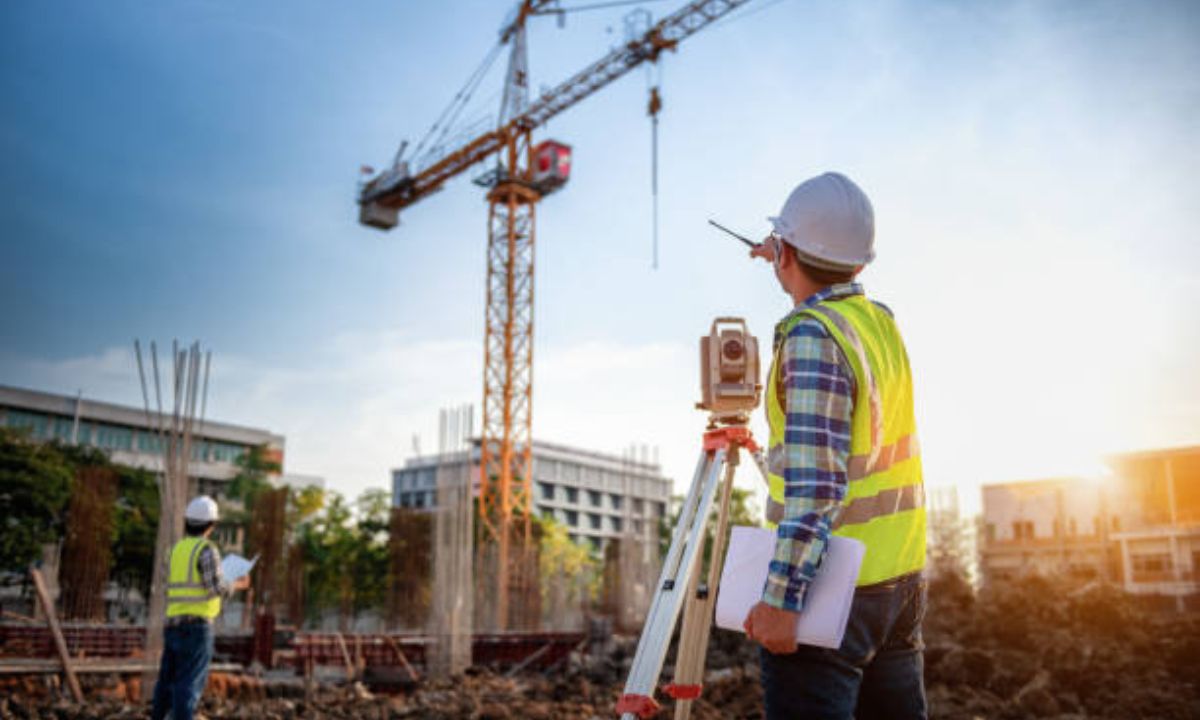
Maintaining safe access requires more than simply leaving part of the car park open. Professional resurfacing contractors create a traffic management plan before work starts.
This may include:
- Temporary signs directing vehicles to available parking areas
- Clearly marked pedestrian routes
- Barriers separating construction zones
- Temporary access routes
- Scheduled deliveries outside busy periods
- Communication with site managers and customers
The aim is to separate construction activity from normal site operations as much as possible.
A reliable contractor will also consider accessibility requirements, ensuring that disabled parking spaces, entrances, and pedestrian pathways remain available wherever possible.
Choosing the Right Resurfacing Method for Minimum Disruption
The type of resurfacing system used can affect how quickly a car park can return to normal operation. Different surfaces have different installation requirements, curing times, and maintenance needs.
Tarmac and asphalt are commonly used for commercial car parks because they provide a strong, cost-effective, and durable surface. They can also often be installed efficiently when the project is properly planned.
Other options, such as resin-bound surfacing or block paving, may be suitable depending on the site’s requirements, appearance goals, drainage needs, and expected traffic levels.
Before choosing materials, businesses should discuss:
- Expected vehicle usage
- Heavy vehicle movement
- Weather conditions
- Maintenance requirements
- Budget considerations
A suitable material choice helps reduce future repairs and extends the life of the car park.
Preparing the Site Without Closing Everything
Preparation work is one of the most important stages of resurfacing. A poor foundation can lead to cracks, potholes, and surface failure even if high-quality materials are installed.
Contractors may need to complete:
- Surface cleaning
- Removal of damaged sections
- Ground stabilisation
- Drainage repairs
- Edge repairs
- Levelling and grading work
Many preparation tasks can also be completed in stages. For example, contractors may repair damaged areas in one section while another part of the car park remains available for vehicles.
This approach allows businesses to continue operating while essential groundwork is completed.
Scheduling Work to Reduce Business Disruption
Timing plays a major role in completing car park resurfacing without closing the entire site. Experienced contractors work closely with businesses to create a schedule that fits around normal operations.
For many commercial properties, resurfacing work can be planned during:
- Quieter business periods
- Evenings or weekends where practical
- Staff changeover times
- Lower customer traffic periods
A construction schedule should not only consider the working hours of the contractor but also the needs of the people using the site.
For example, an industrial facility may need delivery routes available early in the morning, while a retail business may need customer parking available throughout opening hours. Understanding these requirements helps contractors organise each stage efficiently.
A detailed programme of work can also reduce delays caused by poor coordination. Materials, machinery, labour, and traffic management systems should be arranged before work starts to keep the project moving.
How Long Does Car Park Resurfacing Take?
The duration of a resurfacing project depends on several factors, including:
- Size of the car park
- Existing surface condition
- Required repairs
- Type of surfacing material
- Weather conditions
- Access requirements
A small car park may be completed within a few days, while larger commercial sites may require several weeks when completed in phases.
However, phased construction does not necessarily mean the project takes significantly longer. With effective planning, contractors can complete different sections efficiently while maintaining access to the rest of the site.
The most accurate timeline comes after a site survey because every car park has different challenges.
Managing Vehicle Movement During Construction
One of the biggest challenges when resurfacing an active car park is managing vehicle movement safely. Cars, delivery vehicles, pedestrians, and construction equipment must operate around the same area without creating unnecessary risks.
A professional contractor will establish clear working zones and ensure vehicles do not enter areas where surfacing materials are being installed or are still curing.
Traffic management may involve:
- Temporary one-way systems
- Reduced speed areas
- Clearly marked parking zones
- Controlled access points
- Communication with regular site users
For busy commercial locations, communication is essential. Staff, customers, suppliers, and visitors should know about temporary changes before construction begins.
Why Businesses Should Avoid Delaying Car Park Repairs
Some businesses postpone resurfacing because they are concerned about disruption. However, delaying necessary repairs can create larger problems in the future.
Small cracks and surface damage allow water to enter the underlying structure. During colder months, trapped moisture can expand and cause further deterioration.
Ignoring early warning signs can lead to:
- Larger potholes
- Increased repair costs
- Vehicle damage claims
- Poor customer experience
- Reduced site appearance
- Potential safety concerns
A planned resurfacing project is usually more cost-effective than emergency repairs after significant damage occurs.
Businesses looking for professional groundwork and surfacing solutions can discuss their requirements through Batten Road & Drive Contractors’ local services page and arrange an assessment through their Google Business Profile.
The Role of Drainage in Car Park Resurfacing
Drainage problems are one of the most common reasons car park surfaces fail. Water that cannot drain properly can weaken the foundation and damage the surface over time.
During resurfacing, contractors should inspect:
- Existing drainage channels
- Surface gradients
- Water collection points
- Damaged drainage systems
Improving drainage during resurfacing can significantly increase the lifespan of the finished surface.
A professional approach does not simply cover damaged areas; it addresses the reasons the damage happened in the first place.
Safety Considerations During Active Car Park Resurfacing
Safety must remain a priority when construction takes place on an operational site. Contractors must protect workers, drivers, pedestrians, and visitors throughout the project.
Safety measures commonly include:
- Clearly separated work zones
- Warning signs
- Barriers and cones
- Controlled machinery movement
- Regular site checks
- Safe pedestrian routes
Businesses should choose contractors who understand how to work around occupied sites and follow recognised construction safety practices. Guidance from the Health and Safety Executive provides useful information on managing workplace risks during construction activities: https://www.hse.gov.uk/construction/
How Commercial Clients Benefit From Phased Resurfacing
For commercial property owners, phased resurfacing provides several advantages:
- Business operations can continue
- Customers maintain access
- Revenue disruption is reduced
- Safety improvements can be completed gradually
- Construction problems can be identified early
This approach is especially useful for locations where complete closure is not practical.
Office buildings, shopping areas, schools, warehouses, and industrial sites often rely on controlled resurfacing methods to improve their external areas without stopping daily activities.
Working With an Experienced Local Surfacing Contractor
Choosing the right contractor is one of the most important decisions in any resurfacing project. A company with local experience understands common site conditions, weather challenges, planning requirements, and the expectations of commercial and residential clients.
Batten Road & Drive Contractors provide groundwork, paving, driveway, and surfacing services across Henfield, Hove, and surrounding areas. Their experience with local projects allows them to plan practical solutions that balance quality, safety, and minimal disruption.
A reliable contractor should provide:
- Detailed site assessment
- Clear project planning
- Suitable material recommendations
- Transparent timelines
- Professional traffic management
- Quality workmanship
How Technology and Modern Equipment Help Reduce Disruption
Modern resurfacing equipment and improved construction methods allow contractors to complete projects faster and with better control. The use of efficient machinery, accurate measurements, and improved materials means less time is required on site.
Modern techniques help with:
- Faster removal of damaged surfaces
- More accurate preparation work
- Consistent material application
- Improved surface quality
- Reduced construction periods
For larger car parks, professional equipment allows contractors to complete more work during each phase, reducing the overall impact on businesses and visitors.
The quality of machinery also affects the final result. A properly installed surface requires accurate levels, correct compaction, and careful finishing to ensure durability.
Can a Car Park Be Resurfaced During Business Hours?
Yes, many car parks can be resurfaced while a business remains open, but it depends on the size of the site, traffic levels, and the work being completed.
For some locations, contractors can work during normal operating hours by keeping certain areas available. For others, specific tasks such as surface removal or final surfacing may be scheduled during quieter periods.
The decision depends on:
- The number of vehicles using the car park
- Available alternative parking areas
- Noise restrictions
- Safety requirements
- The size of the construction zone
A professional contractor will discuss these factors before starting work and create a plan that suits the site’s needs.
How Businesses Should Prepare Before Resurfacing Starts
Although the contractor manages the construction process, businesses can help reduce disruption by preparing in advance.
Recommended preparation includes:
- Informing employees and customers about upcoming work
- Removing unnecessary vehicles from affected areas
- Identifying important access routes
- Sharing delivery schedules with the contractor
- Assigning a site contact for communication
Good preparation prevents confusion and allows the resurfacing team to work efficiently.
Clear communication between the contractor and the business is often the difference between a smooth project and unnecessary delays.
Common Mistakes When Planning Car Park Resurfacing
Many problems occur when businesses focus only on price and ignore planning quality. Choosing the cheapest option without considering experience, materials, and project management can lead to expensive repairs later.
Common mistakes include:
Choosing a Contractor Without Relevant Experience
Active commercial sites require different planning compared with empty construction areas. Contractors need experience managing traffic, safety, and phased working.
Ignoring Drainage Problems
Applying a new surface over drainage issues can cause premature failure. Water management should always be considered.
Using Poor Quality Materials
A car park used by regular vehicles or heavy commercial traffic requires materials suitable for the expected load.
Failing to Communicate With Users
Customers and staff should understand temporary changes before work begins.
Not Planning for Future Maintenance
A resurfacing project should consider long-term performance, not only the immediate appearance.
What Questions Should You Ask a Car Park Resurfacing Contractor?
Before hiring a contractor, businesses should ask important questions to understand the planned approach.
Useful questions include:
- Have you completed similar commercial resurfacing projects?
- How will you maintain access during construction?
- What resurfacing method do you recommend and why?
- How will traffic management be handled?
- How long will each phase take?
- What preparation work is required?
- What maintenance will the surface need after completion?
A professional contractor should be able to explain the process clearly and provide realistic expectations.
Internal Links for Related Construction Services
Businesses planning external improvements often need more than resurfacing alone. Related services such as groundwork, paving, and driveway installation can improve the overall condition and appearance of a property.
For example, proper groundwork preparation can strengthen a new surface and prevent future movement. A suitable driveway design can also improve access and appearance for residential and commercial properties.
Batten Road & Drive Contractors provide a range of local construction solutions including groundwork and external improvement services throughout Henfield, Hove, and nearby areas.
(Internal Link 1: Add link to Groundwork Services page)
(Internal Link 2: Add link to Driveway Installation page)
(Internal Link 3: Add link to Paving Services page)
(Internal Link 4: Add link to Road Surfacing Services page)
Frequently Asked Questions
Can a car park be resurfaced while customers still use the business?
Yes. Many resurfacing projects are completed in phases, allowing customers and employees to continue accessing parts of the site while construction takes place in separate areas.
How do contractors keep a car park open during resurfacing?
Contractors use phased working, temporary traffic management, barriers, signs, and planned access routes to separate construction areas from active parking areas.
Does a business need to close during car park resurfacing?
Not usually. Full closure is only required for certain projects where safety, space, or construction requirements make partial access impossible.
What is the best surface material for a commercial car park?
Tarmac and asphalt are commonly used because they provide durability, cost efficiency, and suitability for regular vehicle traffic. The best option depends on usage, drainage, and site requirements.
How long does a resurfaced car park last?
A professionally installed car park surface can last many years when the correct materials, preparation methods, drainage systems, and maintenance plans are used.
Can resurfacing fix potholes and damaged areas?
Yes. Resurfacing can repair worn areas, but contractors should also investigate the underlying causes such as drainage problems or damaged foundations.
Is resurfacing cheaper than rebuilding a car park?
In many cases, resurfacing is more cost-effective than complete reconstruction because it improves the existing structure rather than replacing everything.
Final Thoughts
A car park does not always need to shut completely during resurfacing. With careful planning, phased construction, effective traffic management, and the right materials, businesses can improve their surfaces while continuing normal operations.
The key is choosing an experienced contractor who understands how to work around active sites and reduce disruption. A well-managed resurfacing project protects customers, improves safety, increases property value, and creates a longer-lasting surface.
For businesses and property owners in Henfield, Hove, and surrounding areas, Batten Road & Drive Contractors can provide practical surfacing and groundwork solutions designed around the needs of each site.
Share