In this article
- What Is a Commercial Surfacing Maintenance Checklist?
- Why Is Regular Commercial Surfacing Maintenance Important?
- The Commercial Surfacing Maintenance Checklist
- How Often Should Property Managers Inspect Commercial Surfacing?
- Seasonal Commercial Surfacing Maintenance Checklist
- How to Prioritise Surfacing Defects
- How to Keep Accurate Maintenance Records
- How Can Property Managers Budget for Surfacing Maintenance?
- When Is Patching Enough, and When Is Resurfacing Necessary?
- How to Arrange Surfacing Maintenance Without Disrupting Business Operations
- What Should Property Managers Ask a Surfacing Contractor?
- Frequently Asked Questions
- Conclusion: Make Commercial Surfacing Maintenance Part of Your Property Management Routine
Commercial surfacing maintenance is an important responsibility for property managers who oversee car parks, access roads, industrial yards, business parks and other shared outdoor spaces. Cracks, potholes, blocked drains and faded road markings can develop gradually, making it easy to overlook problems until they affect safety, business operations or maintenance budgets.
A structured commercial surfacing maintenance checklist helps property managers identify defects early, prioritise repairs and keep external areas in suitable condition. It also provides a practical record of inspections, decisions and maintenance work completed.
Whether you manage an office building in Sussex, a retail site in Surrey, an industrial estate in Kent or a commercial property in London, the right maintenance approach should reflect how the surface is used, the condition of the underlying construction and the risks associated with the site.
This guide explains what property managers should inspect, how often checks should take place, which defects require attention and when professional surfacing support may be appropriate.
What Is a Commercial Surfacing Maintenance Checklist?
A commercial surfacing maintenance checklist is a practical record of the inspections and maintenance tasks required to keep external paved areas in good condition. It helps property managers assess surface deterioration, identify hazards, monitor drainage, maintain road markings and plan repairs.
A typical checklist covers:
- Surface cracks, potholes and loose materials.
- Drainage channels, gullies and standing water.
- Kerbs, edges and transitions between surfaces.
- Areas used by delivery vehicles and heavy traffic.
- Parking bays, directional arrows and pedestrian markings.
- Previous repairs and signs of recurring damage.
- Inspection records, repair priorities and maintenance budgets.
The checklist should be adapted to the individual property. A small office car park may need a different inspection approach from a busy retail park or an industrial yard used by heavy goods vehicles.
There is no single maintenance timetable suitable for every commercial surface. Inspection frequency should reflect site usage, surface condition, weather exposure and the consequences of a defect being left untreated.
Why Is Regular Commercial Surfacing Maintenance Important?
Commercial surfaces experience repeated vehicle movements, braking, turning, weather exposure and changes in temperature. Over time, these factors can affect both the visible surface and the layers beneath it.
Without regular inspections, relatively small defects can become more extensive problems. A minor crack may allow water to enter the pavement structure, while a blocked drain can contribute to standing water and deterioration around the affected area.
A planned maintenance programme helps property managers identify these issues before they become more difficult to address.
1. Improve site safety
Uneven surfaces, potholes, loose aggregate and damaged edges can create hazards for pedestrians, drivers and people moving equipment around the site.
Regular checks allow property managers to identify and manage these hazards. Where an immediate risk exists, the affected area should be made safe using suitable temporary controls while appropriate repairs are arranged.
2. Control maintenance expenditure
Reactive maintenance often means arranging repairs when a defect has already started affecting site operations. Planned inspections provide more time to obtain quotations, allocate budgets and schedule work.
Early intervention is not always the cheapest solution in every circumstance, but identifying deterioration early gives property managers a better opportunity to compare appropriate repair options.
3. Reduce business disruption
A well maintained surface is less likely to require unexpected emergency work. Planned repairs can often be coordinated around customer visits, deliveries, staff parking and normal business hours.
4. Protect the property’s appearance
Car parks, access roads and external yards are part of a commercial property’s first impression. Clear markings, tidy edges, intact surfacing and functioning drainage contribute to a professional environment.
5. Support responsible property management
Documented inspections and maintenance decisions help demonstrate that reported defects have been assessed and appropriate action has been considered. They can also support communication with landlords, tenants, insurers, facilities teams and maintenance contractors.
The Commercial Surfacing Maintenance Checklist
Property managers can use the following checklist during routine inspections. Record the date, the areas inspected, any defects identified, the urgency of the issue and the action required.
1. Inspect the Surface for Cracks
Cracking is one of the most common signs of deterioration in asphalt and tarmac surfaces. However, different cracks can have different causes, so it is important to record their location, extent and pattern rather than treating every crack in the same way.
Look for:
- Long cracks running along or across the surface.
- Interconnected cracks forming a network.
- Cracks around previous repairs.
- Cracks close to kerbs, drains and utility covers.
- Cracks that are widening or appearing in new areas.
- Vegetation growing through cracks.
Small isolated cracks may be suitable for localised treatment, depending on their cause and the condition of the surrounding surface. Extensive interconnected cracking can indicate more significant deterioration that requires professional assessment.
Property manager action: Photograph the cracks, note their approximate length and location, and compare them with previous inspection records. Arrange a professional assessment if the cracking is widespread, recurring or associated with settlement.
2. Check for Potholes and Surface Break-Up
Potholes can develop when the surfacing and underlying materials deteriorate under traffic and environmental exposure. Water entering through cracks or damaged areas can contribute to further deterioration.
During an inspection, look for:
- Potholes of any size.
- Loose or missing surface material.
- Crumbling asphalt around damaged areas.
- Broken patches or repairs that have sunk.
- New defects around entrances and turning points.
- Areas where vehicles may need to swerve to avoid damage.
Do not judge the severity of a pothole by its appearance alone. Its depth, location, surrounding condition and the type of traffic using the area all matter.
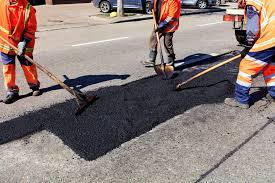
Property manager action: Record the defect and assess whether it creates an immediate hazard. Restrict access where necessary and arrange suitable repairs. Larger or recurring potholes should be investigated to determine whether the underlying construction also needs attention.
Batten Civil Engineering Ltd provides commercial surfacing, patching and resurfacing services for roads and car parks. Explore the company’s surfacing and car park services to discuss the options for your site.
3. Inspect Drainage Channels and Gullies
Drainage is a critical part of commercial surfacing maintenance. Water that collects on the surface or enters damaged pavement can contribute to deterioration, particularly where the problem remains unresolved.
Check:
- Gullies and drainage grates for leaves and debris.
- Drainage channels for visible damage.
- Areas where water collects after rainfall.
- Changes in surface levels around drainage points.
- Cracks or settlement around inspection covers.
- Signs that water is flowing towards entrances or buildings.
- Erosion around the edges of paved areas.
Where possible, inspect the site during or after rainfall to identify pooling that may not be obvious in dry conditions.
Do not open drainage covers or enter confined spaces unless the work is undertaken by appropriately trained and authorised personnel using suitable procedures.
Property manager action: Arrange routine cleaning where appropriate and investigate recurring standing water. If a surface repeatedly develops potholes near a drain, repairing the visible damage alone may not address the underlying cause.
4. Check Kerbs, Edges and Surface Transitions
The edges of car parks and access roads can deteriorate where vehicle movements, water erosion or inadequate support affect the surrounding construction.
Pay particular attention to:
- Cracked or displaced kerbs.
- Crumbling asphalt along the perimeter.
- Gaps between paved and unpaved areas.
- Uneven transitions between roadways and footpaths.
- Settlement around entrances and loading areas.
- Damaged edges near drainage channels.
Changes in level can affect vehicle movements and pedestrian access. Damaged kerbs may also influence how water flows across the site.
Property manager action: Record damaged edges and establish whether the problem is isolated or part of a wider area of movement. Where repairs involve changes to levels, kerbing or drainage, ask a surfacing contractor to assess the connected elements together.
5. Examine High Traffic and Heavy Load Areas
Some areas deteriorate faster because they experience more traffic or heavier loads than the rest of the property.
These locations often include:
- Entrances and exits.
- Vehicle turning circles.
- Delivery routes.
- Loading bays.
- Refuse collection areas.
- Warehouse access roads.
- Bus or service vehicle stopping areas.
- Areas where vehicles brake or queue frequently.
Look for rutting, depressions, cracking, surface deformation and recurring patches. Rutting may indicate that the surface or underlying construction is not coping with the traffic demands.
Property manager action: Inspect high traffic areas more frequently where site conditions justify it. If defects repeatedly appear along a delivery route, review the expected vehicle loads and ask whether the existing construction remains suitable.
6. Review Previous Repairs
Previous repairs should remain part of every commercial surfacing inspection. A patch that initially looked satisfactory may later crack, settle or separate from the surrounding surface.
Check:
- Whether repaired areas remain level.
- Whether cracks have reappeared around the repair.
- Whether the patch is breaking up.
- Whether water collects around the repaired area.
- Whether several repairs are deteriorating in the same location.
Repeated repair failures may indicate that the original problem was not fully addressed. For example, a pothole caused by a failing foundation may return even after the surface has been patched.
Property manager action: Keep a record of the original defect, the repair method and the date of completion. If the same area repeatedly fails, arrange a professional assessment before commissioning further repairs.
7. Inspect Parking Bays and Road Markings
Commercial surfacing maintenance is not limited to the asphalt itself. Road markings help organise traffic, identify parking spaces and communicate how different parts of the site should be used.
Check:
- Parking bay lines.
- Directional arrows.
- Pedestrian crossings and routes.
- Accessible parking markings.
- Loading bay markings.
- Hatched areas and restricted parking zones.
- Stop lines and other traffic control markings.
- Signs and markings used to guide vehicles.
Faded markings can make a car park harder to navigate and may contribute to confusion between drivers and pedestrians. Markings should be assessed in the context of the property’s layout and applicable requirements.
Property manager action: Arrange repainting or redesign where necessary. If resurfacing is planned, coordinate line marking with the wider project so the final layout is clear and consistent.
Batten provides commercial line marking services for roads, car parks, warehouses, factories and other sites.
8. Check for Standing Water and Surface Depressions
Standing water is a useful warning sign during a surface inspection. It may indicate blocked drainage, incorrect gradients, settlement or depressions that have developed over time.
Look for:
- Puddles in parking bays.
- Water collecting near entrances.
- Depressions along vehicle routes.
- Water pooling around potholes.
- Wet areas that remain after surrounding surfaces have dried.
- Water collecting near buildings or pedestrian access points.
Property manager action: Photograph the affected areas after rainfall and record how frequently the problem occurs. Ask a professional to assess the cause if pooling is persistent or associated with surface deterioration.
Do not assume that a new surface layer will automatically correct drainage problems. The appropriate solution depends on the existing levels, drainage infrastructure and condition of the pavement.
9. Look for Loose Aggregate and Surface Fretting
Surface fretting occurs when aggregate or other surface material becomes loose and the surface begins to break down. It can affect appearance and may indicate that the material is deteriorating.
Check for:
- Loose stones across the surface.
- Rough or uneven areas.
- Material accumulating at the edges.
- Deterioration around older patches.
- Surface break-up in frequently used vehicle lanes.
Property manager action: Record the extent of the damage and arrange an assessment where the affected area is growing. Cleaning away loose material may improve appearance temporarily, but it will not resolve the underlying deterioration.
10. Inspect Utility Covers and Drainage Structures
Manhole covers, inspection chambers and drainage structures create transitions between the surrounding pavement and the installed structure. Movement or deterioration around these points can create uneven surfaces.
Check for:
- Cracking around covers.
- Settlement or raised edges.
- Gaps between the cover frame and surfacing.
- Loose or damaged covers.
- Water collecting around the structure.
Property manager action: Treat loose covers and significant level differences as potential safety concerns. Arrange assessment by the appropriate specialist, particularly where the defect involves the structure itself rather than the surrounding surfacing.
11. Check Vegetation and Surface Cleanliness
Vegetation growing through cracks can retain moisture and make surface defects harder to monitor. Leaves, mud and other debris may also obstruct drainage or create slippery conditions.
Inspect:
- Weeds growing through cracks and joints.
- Leaves collecting around gullies.
- Mud and loose debris on vehicle routes.
- Algae or other growth in damp areas.
- Overhanging vegetation affecting visibility.
Property manager action: Arrange appropriate cleaning and vegetation management. Avoid using chemicals or cleaning methods that could damage the surface, affect drainage or create environmental risks.
12. Assess Access Routes and Pedestrian Areas
Property managers should consider how people move around the site as well as how vehicles use it.
Check the condition of footpaths, crossing points, ramps, access routes and connections between parking areas and building entrances.
Look for uneven surfaces, damaged edges, standing water, obstructed routes and markings that have become difficult to see.
Where the site includes accessible parking or pedestrian routes, check that the relevant facilities remain usable and that maintenance work does not introduce new barriers.
Property manager action: Prioritise defects that could affect safe access. If temporary closures are needed during repairs, communicate alternative routes and maintain suitable access arrangements where practicable.
How Often Should Property Managers Inspect Commercial Surfacing?
The appropriate inspection frequency depends on the property’s use, condition, traffic levels and exposure to weather. A busy retail car park or industrial yard may require more frequent checks than a small office parking area.
The following schedule is a practical starting point, not a universal legal requirement.
Routine visual checks
Inspect the site regularly for obvious hazards, new potholes, debris, damaged covers and other defects. The frequency should reflect site activity and any previous problems.
Monthly documented inspections
For many commercial sites, a documented monthly inspection can provide a useful routine for checking the full surface, drainage points, edges and road markings. Higher risk sites may need more frequent inspections.
Seasonal inspections
Review the surface before and after periods of challenging weather where appropriate. Autumn leaves can obstruct drainage, while heavy rain, frost and temperature changes may reveal or worsen existing defects.
Annual condition review
Arrange a more comprehensive review of the surface condition and outstanding maintenance requirements. This is an opportunity to assess deterioration trends, plan budgets and decide whether professional advice is needed.
Inspections after significant events
Additional checks may be appropriate after severe weather, flooding, vehicle impacts, construction activity or reports of a new defect.
Property managers can also consult Batten’s guide on how often commercial car parks should be maintained for further planning considerations.
Seasonal Commercial Surfacing Maintenance Checklist
Seasonal planning helps property managers anticipate problems that may develop at different times of the year.
Spring maintenance
After winter, inspect the site for:
- New cracks and potholes.
- Surface deterioration caused by water and temperature changes.
- Damage around kerbs and drainage channels.
- Loose materials and failed patches.
- Faded road markings.
Use the findings to prepare a repair schedule and address defects that have worsened during the colder months.
Summer maintenance
During warmer periods, property managers may have opportunities to plan larger maintenance projects, subject to suitable conditions and contractor availability.
Review the overall surface condition, arrange repairs and consider whether resurfacing should be included in the next maintenance budget.
High temperatures do not automatically mean every surfacing treatment is suitable, so follow the contractor’s recommendations for the materials and work involved.
Autumn maintenance
Before periods of heavy rainfall, check gullies, channels and other drainage features. Remove accumulated leaves and debris where it is safe to do so.
Inspect areas where water has collected previously and make sure outstanding defects have been recorded.
Winter maintenance
Continue monitoring potholes, cracks, standing water and damaged access routes. Where freezing conditions are expected, consider how defects and drainage issues may affect site users.
If winter maintenance involves de-icing products, check that the selected materials and application methods are appropriate for the surface and surrounding environment.
How to Prioritise Surfacing Defects
Not every defect requires the same response. A prioritisation system helps property managers direct attention towards the most urgent issues while planning less urgent work sensibly.
High priority: Immediate safety concerns
Examples include a severe pothole in an active vehicle route, a loose utility cover, a significant trip hazard or damage that prevents safe access.
Restrict access or introduce suitable temporary controls where necessary, notify the responsible parties and arrange urgent assessment and repair.
Medium priority: Deterioration that may worsen
Examples include growing cracks, recurring potholes, damaged edges and persistent standing water.
Record the defect, investigate its cause and arrange repair within a timeframe appropriate to the risk and site conditions.
Planned maintenance: Routine improvements
Examples include faded markings, minor surface wear and non urgent maintenance tasks that do not currently create an immediate hazard.
Include these tasks in the maintenance programme and budget, while continuing to monitor their condition.
This system should be adjusted to the property. A small defect in a heavily used access route may require faster attention than a similar defect in an isolated area.
How to Keep Accurate Maintenance Records
Inspection records help property managers track deterioration, demonstrate how concerns have been handled and prepare budgets for future work.
A simple spreadsheet or property maintenance system can be sufficient if it is updated consistently.
For every inspection, record:
- Date and time.
- Name of the inspector.
- Areas inspected.
- Defects identified and their locations.
- Photographs where useful.
- Risk assessment or priority assigned.
- Temporary controls introduced.
- Repairs requested and the responsible contractor.
- Completion dates and work carried out.
- Follow up inspections or outstanding actions.
Use consistent location references so that defects can be compared across inspections. For example, identify an issue as being beside the north entrance or loading bay three rather than recording only that it is in the car park.
Where a defect is reported by a tenant, employee or visitor, record the report and the action taken.
Keep records in accordance with your organisation’s retention policies and any relevant contractual or legal requirements.
How Can Property Managers Budget for Surfacing Maintenance?
A maintenance budget should distinguish routine tasks from repairs and larger renewal projects.
Routine maintenance may include inspections, cleaning, vegetation control and drainage checks. Repair budgets may cover localised patching, damaged kerbs or isolated drainage problems. Larger projects may involve partial or full resurfacing.
Create a prioritised maintenance plan
Use inspection records to identify the work required and group tasks by urgency, location and type.
Where several defects occur in the same area, ask whether they should be addressed as part of a single coordinated project.
Obtain comparable quotations
When requesting quotations, provide contractors with the same information about the site and the work required. Ask them to explain preparation, materials, drainage, traffic management, waste removal and finishing requirements.
This makes it easier to compare proposals and understand what each price includes.
Allow for unexpected repairs
Even a well maintained site can develop new defects. Set aside an appropriate contingency based on the property’s condition, history and operational risks.
Avoid relying on a generic percentage without considering the actual site. Properties with ageing surfaces or repeated drainage problems may need a different approach from those in good condition.
Plan larger works in advance
If inspections show widespread cracking, repeated patch failures or substantial deterioration, obtain professional advice about the options available.
Early planning provides more time to compare solutions, agree budgets and schedule works around the business.
When Is Patching Enough, and When Is Resurfacing Necessary?
The right maintenance treatment depends on the extent of the damage, its underlying cause and the condition of the existing pavement.
When localised patching may be appropriate
Patching may be suitable where damage is limited to particular areas and the surrounding construction remains in reasonable condition.
Examples include isolated potholes or localised deterioration where the underlying problem can be addressed through a suitable repair.
When resurfacing may be worth considering
Resurfacing may be appropriate when a larger area shows widespread surface deterioration, repeated defects or a need for renewal.
However, resurfacing alone may not resolve problems caused by a weak foundation, inadequate drainage or significant settlement. These issues may require additional investigation and construction work.
When a professional assessment is advisable
Seek professional advice if:
- Potholes repeatedly return after repairs.
- Cracking is widespread or interconnected.
- Large areas show rutting or settlement.
- Standing water persists despite previous work.
- Several defects occur together in the same location.
- You are unsure whether the problem affects the surface or the underlying construction.
A contractor can assess the site and explain the available options, including the benefits, limitations and expected scope of each approach.
Batten Civil Engineering Ltd provides commercial surfacing and patching, alongside related groundwork and civil engineering services where required.
How to Arrange Surfacing Maintenance Without Disrupting Business Operations
Maintenance work can affect parking, deliveries, customers and staff. Planning the project around normal site activity can help reduce disruption.
Before work starts, agree:
- Which areas will be closed.
- Whether work can be completed in phases.
- Where temporary parking will be provided.
- How delivery vehicles will access the site.
- Which pedestrian routes will remain available.
- How emergency access will be maintained.
- Where materials and machinery will be positioned.
- How users will be informed about changes.
For example, a retail property may schedule work in quieter periods and divide the car park into sections. An industrial site may need to coordinate repairs with delivery schedules to avoid blocking loading areas.
The contractor should confirm how the work area will be separated from operational areas and when each section can safely reopen.
Batten’s guide to planning commercial surfacing work around business operations provides additional considerations for coordinating work with day to day site activity.
What Should Property Managers Ask a Surfacing Contractor?
Before appointing a contractor, ask questions that help you understand the proposed solution and the responsibilities involved.
Useful questions include:
- What is causing the defects we have identified?
- Is the damage limited to the surface or does it affect the underlying construction?
- Which repair options are suitable for this site?
- Will drainage, kerbs or utility covers need attention?
- What preparation is included in the quotation?
- Which materials and construction methods are proposed?
- How will the work affect access and business operations?
- What quality checks will be carried out?
- How will additional work be approved?
- What maintenance should we plan after completion?
Ask for the answers and agreed scope to be documented. A clear written proposal makes it easier to evaluate the work, compare quotations and manage the project.
Frequently Asked Questions
1. What should a commercial surfacing maintenance checklist include?
It should cover cracks, potholes, drainage, standing water, kerbs, surface edges, previous repairs, road markings, pedestrian routes and high traffic areas. It should also include inspection dates, photographs, repair priorities and records of completed work.
2. How often should commercial car parks be inspected?
Inspection frequency should reflect site usage, condition and risk. Routine visual checks, documented inspections, seasonal reviews and an annual condition assessment can provide a useful starting point, with more frequent checks where heavy traffic or previous defects justify them.
3. Who is responsible for maintaining a commercial car park?
Responsibility depends on the property ownership, lease, management agreement and other relevant arrangements. Property managers should confirm who is responsible for inspections, repairs, drainage and common areas, and make sure reported defects are passed to the appropriate person.
4. What are the most common signs of surfacing deterioration?
Common signs include cracks, potholes, loose aggregate, rutting, settlement, damaged edges, standing water and failing patches. Faded road markings and damage around drainage structures should also be included in routine inspections.
5. Can small potholes be repaired without resurfacing the whole car park?
Yes, localised patching may be suitable when the damage is limited and the surrounding pavement remains in suitable condition. If potholes repeatedly return or the underlying construction is weak, a more extensive repair may be needed.
6. Why is drainage important for surfacing maintenance?
Poor drainage can allow water to collect on the surface or enter damaged pavement. This can contribute to deterioration and recurring defects, so property managers should investigate persistent standing water and damaged drainage features.
7. When should a commercial car park be resurfaced?
Resurfacing should be considered when deterioration is widespread, repairs are becoming frequent or the existing surface no longer meets the site’s requirements. A professional assessment can help determine whether patching, partial resurfacing or more extensive reconstruction is appropriate.
8. Should line marking be included in car park maintenance?
Yes. Property managers should check parking bays, directional arrows, pedestrian routes and other relevant markings. Repainting or redesigning markings can often be coordinated with resurfacing to create a clear and consistent layout.
9. What maintenance records should property managers keep?
Records should include inspection dates, the person carrying out the check, defect locations, photographs, decisions, repairs requested, contractor details and completion dates. Follow up inspections and outstanding actions should also be recorded.
10. Can surfacing repairs be completed while a commercial site remains open?
Sometimes. Depending on the site layout and the work required, repairs can be phased to maintain access to selected areas. The contractor and property manager should agree traffic management, pedestrian routes, delivery arrangements and safe reopening procedures.
Conclusion: Make Commercial Surfacing Maintenance Part of Your Property Management Routine
A commercial surfacing maintenance checklist gives property managers a practical way to identify defects, prioritise repairs and plan future expenditure. By checking cracks, potholes, drainage, kerbs, road markings and high traffic areas, you can build a clearer picture of the property’s condition and take action when problems arise.
The most effective maintenance approach combines routine inspections, accurate records, timely repairs and professional advice when defects suggest a deeper problem. Rather than waiting until the surface becomes difficult to use, property managers can use inspection findings to plan maintenance around operational needs and available budgets.
Batten Civil Engineering Ltd provides surfacing, patching and related civil engineering services across Sussex, Surrey, Kent and London. If you manage a commercial car park, access road or industrial yard and need advice on repairs or resurfacing, discuss your site requirements with the team.
Share