In this article
- What Is Car Park Patching?
- What Does Full Car Park Resurfacing Involve?
- When Is Car Park Patching the Right Choice?
- When Should Full Car Park Resurfacing Be Considered?
- Signs That the Problem May Be Below the Surface
- Six Factors That Determine the Best Repair
- Car Park Patching vs Resurfacing
- Is Patching Always the Cheaper Option?
- Can a Car Park Be Resurfaced Without Closing the Entire Site?
- What Happens During a Professional Car Park Assessment?
- Questions to Ask a Surfacing Contractor
- Car Park Repairs Across West Sussex and the South East
- Frequently Asked Questions
- Arrange a Car Park Condition Assessment
Choosing between car park patching and resurfacing is not simply a question of cost. The right option depends on how much of the surface has failed, what caused the damage and whether the construction beneath the asphalt remains stable.
Patching can provide an effective repair when defects are isolated. Full resurfacing may offer better value when cracking, potholes and surface deterioration affect much of the car park. If the underlying structure or drainage has failed, additional corrective work may be required before either treatment can deliver a lasting result.
This guide explains how commercial property owners, facilities managers and managing agents can make an informed decision.
What Is Car Park Patching?
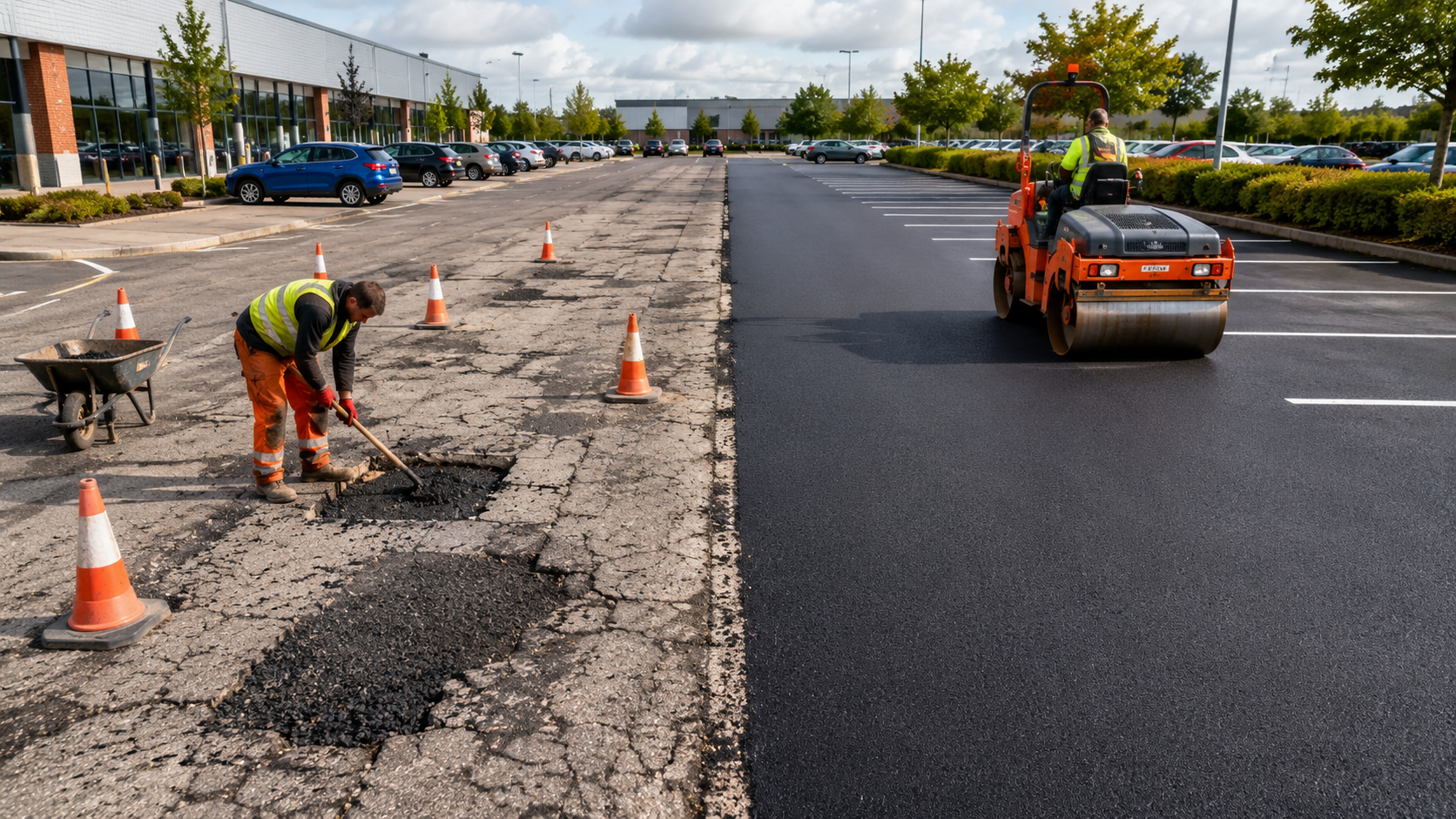
Car park patching repairs a specific area of failed or damaged surfacing without replacing the entire surface.
A proper patch repair usually involves:
- Identifying the full extent of the failed area
- Removing loose or damaged material
- Cutting or planing back to sound edges
- Repairing the base where necessary
- Applying a suitable bonding material
- Installing and compacting new asphalt
- Sealing the joints against water ingress
This is different from placing loose material into a pothole as a short-term measure. A permanent patch must connect securely with the surrounding surface and withstand the traffic using the car park.
Batten Civil Engineering owns specialist equipment for professional car park patching, including a skid-steer planer. This machinery can remove material precisely at depths from approximately 10mm to 200mm, depending on the repair requirements. Top joints can then be sealed with hot-pour bitumen to help reduce water penetration.
What Does Full Car Park Resurfacing Involve?
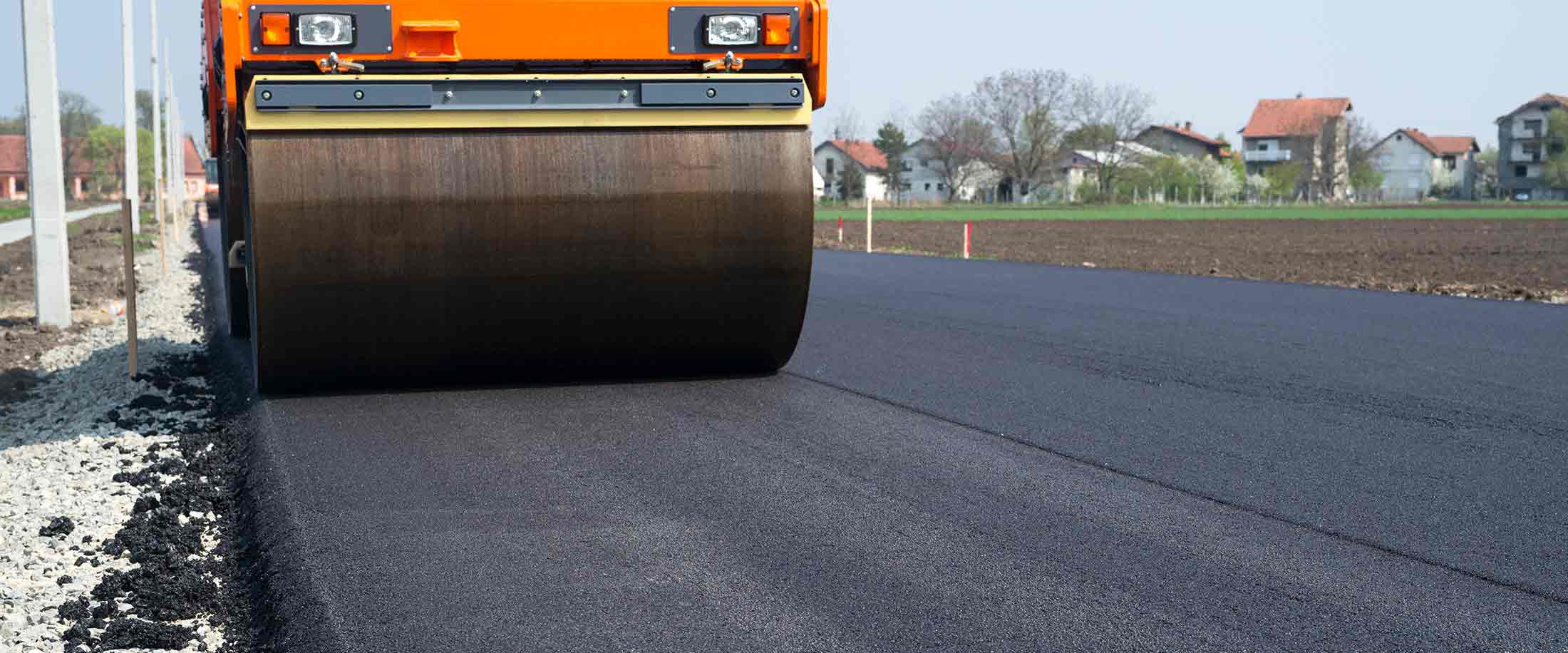
Car park resurfacing replaces the existing surface course across all or a substantial part of the site.
The exact process depends on the condition of the car park, but it may include:
- A condition and level survey
- A review of drainage and water flow
- Planing off the deteriorated surface
- Repairing localised sub-base failures
- Correcting damaged kerbs and channels
- Adjusting covers and drainage features
- Applying a bond coat
- Machine laying new asphalt
- Compacting the new surface
- Reinstating parking bays and safety markings
Resurfacing creates a more consistent finish than a collection of individual patches. It can address widespread surface deterioration, but it does not automatically repair problems below the asphalt.
If the sub-base has moved or drainage is inadequate, those issues must be addressed before the new surface is laid. Otherwise, cracking, settlement and standing water may return.
Batten provides complete road and car park resurfacing for commercial and public sites across the South East.
When Is Car Park Patching the Right Choice?
Patching is normally appropriate when the damage is limited to clearly defined areas and the surrounding surface remains in reasonable condition.
The damage is isolated
One or two potholes do not necessarily justify resurfacing an entire car park. If the rest of the asphalt remains stable, properly prepared patches may restore the affected areas economically.
Examples include damage caused by:
- A localised fuel or oil spill
- A failed utility reinstatement
- Water entering through one damaged joint
- Heavy vehicles repeatedly turning in one position
- A small area of weak construction
- Damage around a drain or inspection cover
The cause still needs to be investigated. Repairing the visible pothole without correcting the source of the failure may only provide a temporary improvement.
The surrounding asphalt is still sound
A patch depends on stable material around it. The new asphalt must join securely to the existing surface.
If the surrounding surface is heavily cracked, loose or crumbling, the edge of the patch may fail even if the new material has been installed correctly. In that situation, the repair area may need to be enlarged or resurfacing may be more suitable.
The sub-base remains stable
The sub-base distributes vehicle loads and provides support beneath the asphalt. If it remains firm and properly compacted, a surface patch may be sufficient.
If the area moves, sinks or deforms under traffic, replacing only the surface course will not correct the structural weakness.
The defect can be removed completely
The repair should extend beyond the visible edges of the pothole into sound material. Clean, stable edges improve bonding and compaction.
Standard permanent repair methods used by UK authorities follow this principle. Damaged material is removed, the area is prepared and replacement asphalt is compacted level with the surrounding surface. Joint sealing is also used to reduce further water entry. Kirklees Council
A prompt safety repair is required
Potholes, loose surfacing and sudden level changes can create risks for vehicles and pedestrians. Patching can address an isolated hazard without waiting for a wider resurfacing programme.
The repair should still be properly designed. A quick response does not have to mean an unsuitable temporary solution.
When Should Full Car Park Resurfacing Be Considered?
Resurfacing becomes more appropriate when deterioration is widespread or when repeated local repairs no longer provide sensible value.
Cracking affects several areas
Individual cracks may sometimes be sealed or repaired. A network of cracks across the surface indicates more extensive deterioration.
Crocodile cracking, named after its connected scale-like pattern, can suggest that the asphalt or underlying construction has lost its ability to carry traffic loads. Covering it with a thin patch will not necessarily stop movement below.
Potholes keep returning
A repaired pothole that fails again may indicate:
- Water is continuing to enter the pavement
- The repair did not extend to sound material
- The sub-base is weak
- Heavy traffic exceeds the original design
- Nearby cracking is allowing the failure to spread
- Drainage is not moving water away effectively
Hampshire County Council explains that multiple defects in the same location can indicate that the road structure needs more extensive repairs. The same principle can apply to commercial car parks. Hampshire County Council
The surface is breaking apart
Fretting occurs when aggregate becomes loose from the asphalt surface. It can start as a rough appearance and gradually develop into shallow depressions and potholes.
When fretting affects much of a car park, repairing each small area separately may be impractical. Resurfacing can provide a consistent new surface, subject to the condition of the layers below.
There is widespread rutting or deformation
Ruts often form in vehicle routes, loading areas and turning points. They may hold water and make the surface uncomfortable or unsafe to use.
Local planing and patching may work where deformation is limited. When wheel-path rutting extends across large parts of the site, a broader repair is likely to be required.
Previous patches cover a substantial part of the car park
A car park can remain serviceable with several well-installed patches. However, a growing patchwork may indicate that the original surface is approaching the end of its practical service life.
Frequent mobilisation for separate repairs can also increase cumulative cost and disruption. A planned resurfacing project may then offer better operational and financial value.
The site needs a consistent appearance
Surface condition influences how customers, tenants and visitors perceive a commercial property. Numerous repairs, faded markings and loose material can make a site appear neglected.
Appearance alone does not determine the technical specification, but resurfacing can combine structural maintenance with a cleaner and more consistent finish.
Signs That the Problem May Be Below the Surface
Neither patching nor resurfacing should be specified until the probable cause of the damage has been considered.
Warning signs of a deeper problem include:
- Repeated sinking in the same place
- Cracks returning through earlier repairs
- Surface movement under heavy vehicles
- Widespread crocodile cracking
- Depressions that regularly collect water
- Failure around drainage channels
- Weak or collapsing edges
- Different areas settling at different rates
These defects may indicate inadequate compaction, poor historic construction, water damage or failure of the sub-base.
Corrective work could involve excavation, replacement of unsuitable material, installation of a stronger sub-base or changes to drainage. Batten’s drainage and civil engineering work can be incorporated where the problem extends below the asphalt.
Six Factors That Determine the Best Repair
1. The extent of the damage
A contractor should consider the entire car park rather than count visible potholes alone. Cracks, loose aggregate, depressions and failed joints can show that the affected area is larger than it initially appears.
There is no reliable universal percentage at which patching automatically becomes resurfacing. The distribution and cause of the damage matter as much as the total area.
2. The cause of the failure
Potholes are symptoms, not diagnoses. They can develop because of water ingress, traffic loading, weak joints, poor compaction or problems beneath the surface.
The proposed repair should address the cause where reasonably possible.
3. The condition of the sub-base
A stable sub-base can support a new patch or resurfaced layer. A failed sub-base normally requires deeper reconstruction.
This is why two car parks with similar-looking potholes may need different specifications.
4. Traffic type and frequency
A lightly used office car park has different demands from:
- A supermarket car park
- A delivery yard
- A hotel entrance
- An industrial estate
- A school drop-off area
- A site used by refuse vehicles or articulated lorries
Turning, braking and stationary loads can place significant stress on particular areas. The repair depth and asphalt specification should reflect actual use.
5. Drainage performance
Water is one of the most damaging influences on asphalt construction. It can enter cracks and joints, weaken lower layers and contribute to pothole development.
The Local Government Association highlights the importance of maintaining drainage and sealing surfaces to reduce water ingress. It also recommends timely preventative treatment before deterioration becomes more extensive. Local Government Association
Before resurfacing, contractors should examine gradients, channels, gullies and areas of standing water.
6. Operational requirements
Commercial sites often need to remain accessible during repairs. The correct option must account for:
- Customer and staff access
- Deliveries
- Emergency routes
- Pedestrian movements
- Disabled parking
- Tenant requirements
- Working-hour restrictions
- Noise and machinery access
A more extensive treatment can sometimes be completed in phases to reduce disruption.
Car Park Patching vs Resurfacing
| Consideration | Patching | Full resurfacing |
| Best suited to | Isolated defects | Widespread deterioration |
| Area treated | Specific failed sections | Most or all of the surface |
| Initial cost | Usually lower | Usually higher |
| Disruption | Normally limited | Requires greater planning |
| Appearance | New areas remain visible | More consistent finish |
| Structural work | Can include local excavation | Can include multiple base repairs |
| Drainage correction | Limited to affected areas | Easier to coordinate across the site |
| Line marking | Local reinstatement may be enough | Full reinstatement is normally required |
| Long-term value | Good when damage is genuinely isolated | Better when repeated repairs are accumulating |
The lowest initial price is not always the lowest long-term cost. The decision should reflect the condition of the full car park and the likelihood of further failures.
Is Patching Always the Cheaper Option?
Patching normally has a lower immediate cost because less material is removed and replaced. It can be the most economical choice when defects are limited and the remaining surface has useful life left.
However, repeated patching can become a false economy when:
- New potholes continue appearing
- Old patches repeatedly fail
- Several visits are required each year
- Water continues entering adjacent cracks
- Repairs cover an increasing proportion of the site
- Access arrangements create repeated disruption
A site assessment should compare the cost of the immediate repair with the likely maintenance requirements over the following years. It should also consider the operational impact of multiple visits.
The objective is not to recommend the largest project. It is to identify the smallest appropriate intervention that addresses the actual condition of the car park.
Can a Car Park Be Resurfaced Without Closing the Entire Site?
Many car parks can be repaired or resurfaced in phases, although this depends on their size, layout and access points.
A phased plan might include:
- Dividing the site into working zones
- Maintaining a controlled vehicle route
- Providing temporary pedestrian routes
- Reserving alternative parking areas
- Scheduling work outside peak operating hours
- Coordinating deliveries in advance
- Reopening completed sections in an agreed sequence
The contractor must also plan machinery movements, material deliveries and safe separation from the public.
New markings may be applied after the surface is ready. Batten’s associated road-marking capability allows resurfacing to be coordinated with commercial line marking for bays, access routes, disabled spaces and safety markings.
What Happens During a Professional Car Park Assessment?
A useful assessment should provide more than a visual quotation from the site entrance.
The contractor may evaluate:
- The location and type of each defect
- The condition of previous patches
- Surface levels and drainage
- Kerbs, channels and inspection covers
- Signs of sub-base movement
- Vehicle types and traffic patterns
- Loading and turning areas
- Access restrictions
- Pedestrian and vehicle safety
- The most practical work sequence
The resulting quotation should identify whether the proposal includes surface patching, deep excavation, planing, base repairs, drainage, kerbs and line-marking reinstatement.
It should also state what is excluded. This makes quotations easier to compare and reduces the risk of unexpected additions after work begins.
Questions to Ask a Surfacing Contractor
Before approving the work, ask:
- What is causing the surface to fail?
- Is the proposed repair temporary or permanent?
- How will damaged material be removed?
- Will the patch extend into sound surrounding asphalt?
- Does the sub-base need repair?
- How will the joints be sealed?
- Are drainage corrections included?
- What type and depth of asphalt will be used?
- How will customer and delivery access be managed?
- When can vehicles return to the repaired area?
- Are new line markings included?
- Can the contractor provide relevant commercial examples?
Batten’s completed car park and surfacing projects include work for commercial organisations, local authorities and high-profile properties across the South East.
Car Park Repairs Across West Sussex and the South East
Local conditions and site use influence how a car park should be repaired. Commercial sites in Henfield, Hove and wider West Sussex may experience different drainage, access and traffic requirements.
Batten Civil Engineering has operated since 1993 and has completed more than 10,000 projects. The company owns its plant, machinery, lorries and vans, giving its team direct control over essential equipment and scheduling.
Its combined capabilities cover patching, asphalt surfacing, groundworks, drainage and line marking. This allows the condition of the full car park to be considered rather than treating every visible defect as an isolated pothole.
Frequently Asked Questions
Can a badly damaged car park be repaired with patches?
It may be possible, but extensive patching is not always the best long-term option. If defects are widespread or the surrounding asphalt is deteriorating, resurfacing or deeper reconstruction may provide better value.
How do you know whether the sub-base has failed?
Repeated settlement, crocodile cracking, deformation and repairs that fail in the same location can indicate deeper movement. Further investigation may be needed once the damaged surface is removed.
Can potholes be repaired in wet weather?
Surface moisture and standing water can affect preparation, bonding and compaction. The contractor should assess the weather, material requirements and condition of the repair area before proceeding.
Do line markings need to be replaced after resurfacing?
Yes, markings removed during resurfacing normally need to be reinstated. The new layout should account for parking bays, pedestrian routes, disabled spaces and other site-specific requirements.
Can resurfacing be completed in phases?
Many commercial car parks can be divided into working zones. Whether this is practical depends on access, traffic flow, site size and the ability to keep vehicles and pedestrians safely separated from the work.
Should drainage be repaired before resurfacing?
Known drainage problems should be addressed as part of the resurfacing plan. Laying new asphalt without correcting persistent standing water or failed drainage may shorten the life of the new surface.
Arrange a Car Park Condition Assessment
Choose patching when defects are isolated, the surrounding asphalt remains sound and the construction below is stable. Consider resurfacing when deterioration is widespread, previous repairs keep failing or the existing surface no longer provides reliable performance.
Batten Civil Engineering can assess the surface, underlying construction, drainage and operational needs of commercial car parks across West Sussex and the wider South East. Contact the team to arrange a site assessment and receive a clear recommendation for targeted patching, resurfacing or deeper corrective work.
Share