In this article
- Why Do Driveways Sink?
- Poor Ground Preparation Before Installation
- Weak or Incorrect Sub-Base Installation
- How Water Causes Driveways to Sink
- Why Do Driveways Crack?
- Temperature Changes and Surface Movement
- Heavy Vehicles and Driveway Damage
- Why Do Driveways Develop Standing Water?
- Incorrect Driveway Gradient and Poor Surface Levels
- Blocked or Missing Drainage Systems
- How Block Paving Driveways Develop Problems
- Why Tarmac Driveways Crack or Break Down
- Why Resin Driveways Can Fail
- Can Driveway Cracks Be Repaired?
- The Importance of Drainage Planning During Driveway Installation
- Signs Your Driveway Needs Professional Assessment
- Why Professional Installation Prevents Future Driveway Problems
- How Ground Conditions Affect Driveway Performance
- The Role of Compaction in Preventing Driveway Failure
- Can Poor Repairs Make Driveway Problems Worse?
- Driveway Maintenance Tips to Prevent Damage
- Choosing the Right Driveway Material for Your Property
- When Should a Driveway Be Repaired Instead of Replaced?
- How Professional Driveway Contractors Identify Problems
- Driveway Services for Homes and Businesses in Henfield and Hove
- External Guidance About Sustainable Drainage and Surface Water Management
- Frequently Asked Questions
- Final Thoughts
A driveway is one of the most frequently used areas around a property. Every day it supports vehicles, experiences changing weather conditions, and manages water runoff from surrounding areas. When a driveway is installed correctly, it can provide years of reliable service. However, problems such as sinking, cracking, and standing water are common signs that something is wrong beneath or around the surface.
Many homeowners assume driveway damage is only caused by age, but the real causes are often related to poor preparation, drainage issues, ground movement, unsuitable materials, or incorrect installation methods.
Understanding why driveways fail helps property owners identify problems early, avoid expensive repairs, and choose the right solution.
Whether the driveway is made from tarmac, block paving, resin, concrete, or another material, the foundation and drainage system play a major role in its long-term performance.
Why Do Driveways Sink?
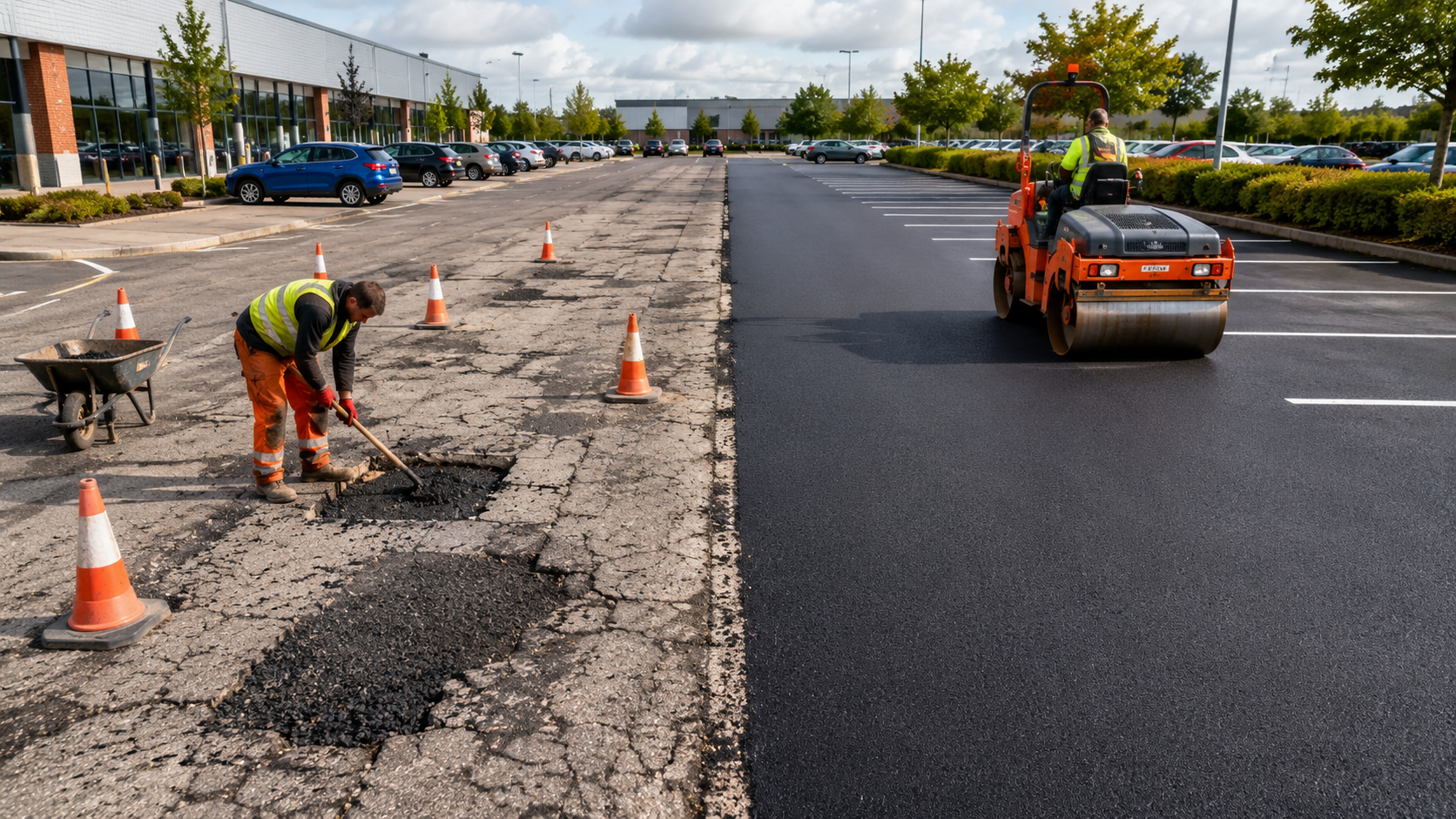
A sinking driveway usually happens because the ground beneath the surface is no longer providing enough support. The visible dip or uneven area is often a symptom of a deeper problem below the driveway surface.
Common causes include:
- Poor ground preparation
- Weak foundation layers
- Soil movement
- Water damage
- Incorrect installation
- Heavy vehicle pressure
A driveway is not simply a top layer of material. It is a complete structure made up of different layers that work together. If the lower layers are not properly prepared and compacted, the surface can eventually move or collapse.
Poor Ground Preparation Before Installation
One of the most common reasons driveways sink is inadequate preparation before installation.
Before laying a driveway surface, contractors need to assess the existing ground conditions and prepare a stable base.
This normally involves:
- Removing unsuitable material
- Excavating to the correct depth
- Installing a suitable sub-base
- Compacting each layer properly
- Creating correct levels for drainage
If this stage is rushed or completed incorrectly, the driveway may look fine initially but develop problems over time.
A strong foundation is essential because it distributes vehicle weight and prevents movement.
Weak or Incorrect Sub-Base Installation
The sub-base is one of the most important parts of any driveway. It provides strength, stability, and support for the surface layer above.
A poor-quality or insufficient sub-base can lead to:
- Uneven surfaces
- Depressions
- Cracking
- Movement after vehicle use
- Reduced driveway lifespan
The correct sub-base thickness depends on factors such as: - Ground conditions
- Expected vehicle weight
- Drainage requirements
- Driveway material
Residential driveways may experience different pressures compared with commercial access areas used by heavier vehicles.
Professional contractors consider these factors before installation.
How Water Causes Driveways to Sink
Water is one of the biggest causes of driveway failure. When water enters beneath the surface, it can weaken the foundation and cause movement.
Problems occur when:
- Drainage is poor
- Water remains trapped underneath
- The ground becomes unstable
- Frost causes expansion and movement
Over time, repeated water exposure can wash away supporting materials and create empty spaces beneath the driveway.
These spaces eventually lead to sinking or uneven areas.
A properly designed driveway should control water movement and prevent moisture from damaging the structure.
Why Do Driveways Crack?
Cracks are another common driveway problem. While some minor surface changes can happen naturally, larger cracks usually indicate an underlying issue.
Common causes include:
- Ground movement
- Poor installation
- Temperature changes
- Heavy vehicle loads
- Water damage
- Age-related deterioration
Different driveway materials develop different types of cracks, and the correct repair method depends on the cause.
For example, repairing a crack without fixing the underlying problem may only provide a temporary solution.
Temperature Changes and Surface Movement
Outdoor surfaces are constantly affected by changing temperatures. Materials expand during warm conditions and contract during colder periods.
This repeated movement can create stress within the driveway surface.
In colder weather, water trapped inside small cracks can freeze and expand, making cracks larger over time.
This process is particularly damaging when small issues are ignored.
Regular inspections allow homeowners to identify early signs of damage before repairs become more complex.
Heavy Vehicles and Driveway Damage
Driveways are designed to handle normal vehicle use, but excessive weight can cause damage if the structure is not suitable.
Problems may occur when:
- Large delivery vehicles regularly access the driveway
- Commercial vehicles use residential surfaces
- Heavy machinery is parked on unsuitable areas
- The driveway was not designed for the current level of use
A driveway that was originally built for family cars may not perform well under repeated heavy loading.
If vehicle use changes, the driveway design may need to be reviewed.
Why Do Driveways Develop Standing Water?
Standing water on a driveway is not only an inconvenience; it is often a sign of poor drainage design or surface problems. Water should naturally flow away from the driveway through correct levels, drainage channels, or suitable permeable materials.
When water remains on the surface after rainfall, it can lead to:
- Surface deterioration
- Slippery areas
- Algae growth
- Ice formation during colder months
- Damage to the driveway foundation
A driveway should be designed with water management in mind from the beginning. Without proper drainage, even high-quality materials may eventually fail.
Incorrect Driveway Gradient and Poor Surface Levels

One of the most common reasons for standing water is incorrect driveway grading.
A driveway needs a suitable slope so rainwater can move away from the surface. If the levels are incorrect, water can collect in low areas instead of draining away.
Poor grading can happen because of:
- Incorrect installation measurements
- Ground movement over time
- Settlement beneath the driveway
- Changes around the property
Professional contractors carefully calculate levels before installation to ensure effective water flow.
Blocked or Missing Drainage Systems
Some driveways require additional drainage solutions, especially where water naturally collects or where properties are located on sloped ground.
Drainage options may include:
- Channel drains
- Linear drainage systems
- Soakaways
- Permeable paving solutions
Without suitable drainage, rainwater has nowhere to go and may collect on the driveway surface or enter the foundation layers.
Internal Link 1: Add link to Driveway Installation Services page
How Block Paving Driveways Develop Problems
Block paving is a popular driveway option because it provides a flexible and attractive surface. However, problems can develop if installation quality is poor.
Common issues include:
- Individual blocks sinking
- Uneven areas
- Weed growth
- Loose blocks
- Water pooling
Block paving relies on correct preparation beneath the blocks. The foundation, bedding layer, and jointing material all contribute to stability.
If the base is not properly prepared, blocks can move under vehicle pressure.
Repairs may involve lifting affected blocks, correcting the foundation, and reinstalling the surface correctly.
Why Tarmac Driveways Crack or Break Down
Tarmac driveways are durable and widely used because they provide a smooth and practical surface. However, they still require proper installation and maintenance.
Common causes of tarmac driveway damage include:
- Weak foundations
- Poor drainage
- Oil spills
- Extreme weather conditions
- Heavy vehicle use
- Age-related wear
Small cracks should not always be ignored. Water entering these cracks can weaken the layers underneath and create larger failures.
Early repairs can often extend the lifespan of a tarmac driveway.
Internal Link 2: Add link to Tarmac Driveway Services page
Why Resin Driveways Can Fail
Resin driveways are known for their appearance, durability, and low maintenance requirements. However, installation quality is critical.
Problems can occur when:
- The base is unsuitable
- Drainage is ignored
- Materials are incorrectly mixed
- Installation conditions are poor
A resin surface depends on a stable foundation underneath. If movement occurs below the surface, cracks and failures may appear.
A professional assessment is important because the correct repair depends on the cause of the problem.
Can Driveway Cracks Be Repaired?
Yes, but the correct repair method depends on the type and severity of the crack.
Minor surface cracks may be repaired with suitable materials, while larger structural cracks may require more extensive work.
A contractor should assess:
- Crack size
- Location
- Cause
- Surface condition
- Foundation stability
Simply filling a crack without addressing the reason it appeared may result in the problem returning.
The Importance of Drainage Planning During Driveway Installation
Good drainage should be considered before any driveway installation begins.
A well-designed driveway considers:
- Natural water movement
- Property levels
- Rainfall patterns
- Surface material
- Surrounding areas
Drainage planning helps prevent future issues and protects both the driveway and nearby structures.
Poor drainage can also affect walls, foundations, gardens, and neighbouring properties if water is directed incorrectly.
Signs Your Driveway Needs Professional Assessment
Homeowners should consider professional advice when they notice:
- Deep cracks
- Large sunken areas
- Water pooling after rain
- Loose or moving sections
- Surface deterioration
- Increasing maintenance requirements
Early assessment can prevent small problems from becoming major reconstruction projects.
A contractor can determine whether repairs are possible or whether replacement provides better long-term value.
Why Professional Installation Prevents Future Driveway Problems
Many driveway problems begin during installation. Choosing experienced contractors helps reduce the risk of future failures.
Professional installation includes:
- Proper ground preparation
- Suitable materials
- Correct drainage design
- Accurate levels
- Quality finishing
- Appropriate compaction
A driveway is a long-term investment, so the installation process is just as important as the visible surface.
How Ground Conditions Affect Driveway Performance
The ground beneath a driveway has a major impact on how long the surface will last. Different soil types behave differently when exposed to moisture, temperature changes, and vehicle pressure.
Some ground conditions are more likely to experience movement, including:
- Clay soils that expand and contract
- Poorly compacted fill materials
- Areas with high moisture levels
- Ground affected by previous construction work
Before installing or repairing a driveway, contractors should understand the existing ground conditions and prepare the base accordingly.
Ignoring ground conditions can result in movement beneath the driveway, leading to cracks, sinking, and uneven surfaces.
The Role of Compaction in Preventing Driveway Failure
Compaction is a critical stage in driveway construction. Each layer beneath the surface must be compressed correctly to create a stable foundation.
Poor compaction can cause:
- Settlement
- Surface movement
- Uneven areas
- Cracking
- Reduced lifespan
Professional contractors use suitable equipment to compact materials properly before applying the final driveway surface.
A strong foundation reduces the risk of future problems and helps the driveway withstand daily vehicle use.
Can Poor Repairs Make Driveway Problems Worse?
Yes. Temporary repairs may sometimes hide visible problems without solving the actual cause.
For example:
- Filling cracks without fixing drainage issues
- Covering damaged surfaces without repairing the foundation
- Replacing blocks without correcting the base
These approaches may provide a short-term improvement but can lead to repeated problems.
A proper repair begins with identifying why the damage occurred.
Driveway Maintenance Tips to Prevent Damage
Regular maintenance can help extend the life of a driveway and reduce repair costs.
Useful maintenance steps include:
Keep Drainage Areas Clear
Blocked drains and channels can cause water to collect and damage the driveway structure.
Remove Oil and Chemical Spills Quickly
Some substances can weaken certain driveway materials and leave permanent marks.
Repair Small Cracks Early
Small cracks allow water to enter and may become larger over time.
Avoid Excessive Weight
Avoid parking vehicles heavier than the driveway was designed to support.
Inspect After Severe Weather
Heavy rainfall, frost, and storms can reveal early signs of damage.
Regular attention helps identify problems before major repairs are required.
Choosing the Right Driveway Material for Your Property
The best driveway material depends on how the area will be used, the appearance required, and the surrounding environment.
Tarmac Driveways
Tarmac is practical, durable, and suitable for many residential and commercial applications.
Benefits include:
- Quick installation
- Smooth finish
- Good vehicle performance
- Cost-effective maintenance
Block Paving Driveways
Block paving offers design flexibility and can be repaired by replacing individual blocks.
Benefits include:
- Multiple design options
- Easy local repairs
- Attractive appearance
Resin Driveways
Resin provides a modern finish and can offer good drainage performance when installed correctly.
Benefits include:
- Decorative appearance
- Smooth surface
- Low maintenance requirements
Internal Link 3: Add link to Resin Driveway Services page
When Should a Driveway Be Repaired Instead of Replaced?
Not every damaged driveway needs complete replacement. In some situations, targeted repairs can restore performance.
Repair may be suitable when:
- Damage is limited to small areas
- The foundation remains stable
- Drainage problems can be corrected
- Surface wear is minor
Replacement may be more suitable when: - Large areas have sunk
- Foundation failure has occurred
- Cracks are widespread
- Water problems continue despite repairs
A professional inspection helps determine the most cost-effective solution.
How Professional Driveway Contractors Identify Problems
Experienced contractors look beyond visible damage. A driveway problem is often caused by issues beneath the surface.
An assessment may include:
- Checking surface condition
- Inspecting drainage
- Evaluating levels
- Reviewing previous repairs
- Examining surrounding ground conditions
This allows contractors to recommend a solution that addresses the real cause.
Driveway Services for Homes and Businesses in Henfield and Hove
Property owners in Henfield, Hove, and surrounding areas need driveway solutions that can handle local conditions and everyday use.
Batten Road & Drive Contractors provide driveway installation, groundwork, paving, and surfacing services for residential and commercial clients.
Their approach focuses on durable construction, correct preparation, and practical solutions designed around each property.
External Guidance About Sustainable Drainage and Surface Water Management
Managing water correctly is an important part of preventing surface problems. The Environment Agency provides guidance about sustainable drainage systems and managing surface water.
Frequently Asked Questions
Why is my driveway sinking in certain areas?
Driveways usually sink because the ground or foundation underneath has moved, often due to poor preparation, water damage, or settlement.
Why does water collect on my driveway after rain?
Standing water is commonly caused by poor drainage, incorrect levels, blocked drainage systems, or surface settlement.
Can cracked driveways be repaired?
Yes. The repair method depends on the size of the crack and whether the underlying foundation remains stable.
How can I stop my driveway from developing cracks?
Proper installation, good drainage, suitable materials, and regular maintenance help reduce cracking.
Should I replace or repair my damaged driveway?
Minor damage may be repaired, but extensive sinking, structural cracks, or repeated drainage problems may require replacement.
How long should a professionally installed driveway last?
The lifespan depends on the material, installation quality, ground conditions, traffic levels, and maintenance.
Are resin driveways suitable for areas with drainage problems?
Resin can support good drainage when correctly designed, but drainage issues beneath the surface must be addressed first.
Why do newly installed driveways sometimes fail?
Early failure is often caused by poor preparation, incorrect materials, inadequate drainage, or insufficient compaction.
Final Thoughts
Driveways usually do not fail without a reason. Sinking, cracking, and standing water are often signs of problems beneath the surface, including poor foundations, drainage issues, ground movement, or unsuitable installation methods.
The best way to prevent driveway problems is through correct planning, quality materials, professional installation, and regular maintenance.
Whether repairing an existing driveway or installing a new one, addressing the underlying cause is essential for achieving a durable result.
For homeowners and businesses across Henfield, Hove, and surrounding areas, working with an experienced driveway and groundwork contractor helps ensure the surface is built to handle everyday use while remaining safe and attractive for years.
Share