In this article
- When Planning Permission Is Not Required
- When Planning Permission May Be Required
- Why Drainage Regulations Are So Important
- What Are SuDS and Why They Matter
- Local Considerations in West Sussex
- How Professional Contractors Help You Stay Compliant
- What Happens If You Ignore Regulations
- Do All Driveways Need to Follow These Rules?
- Driveway Planning and Installation in West Sussex
- Conclusion
- Frequently Asked Questions
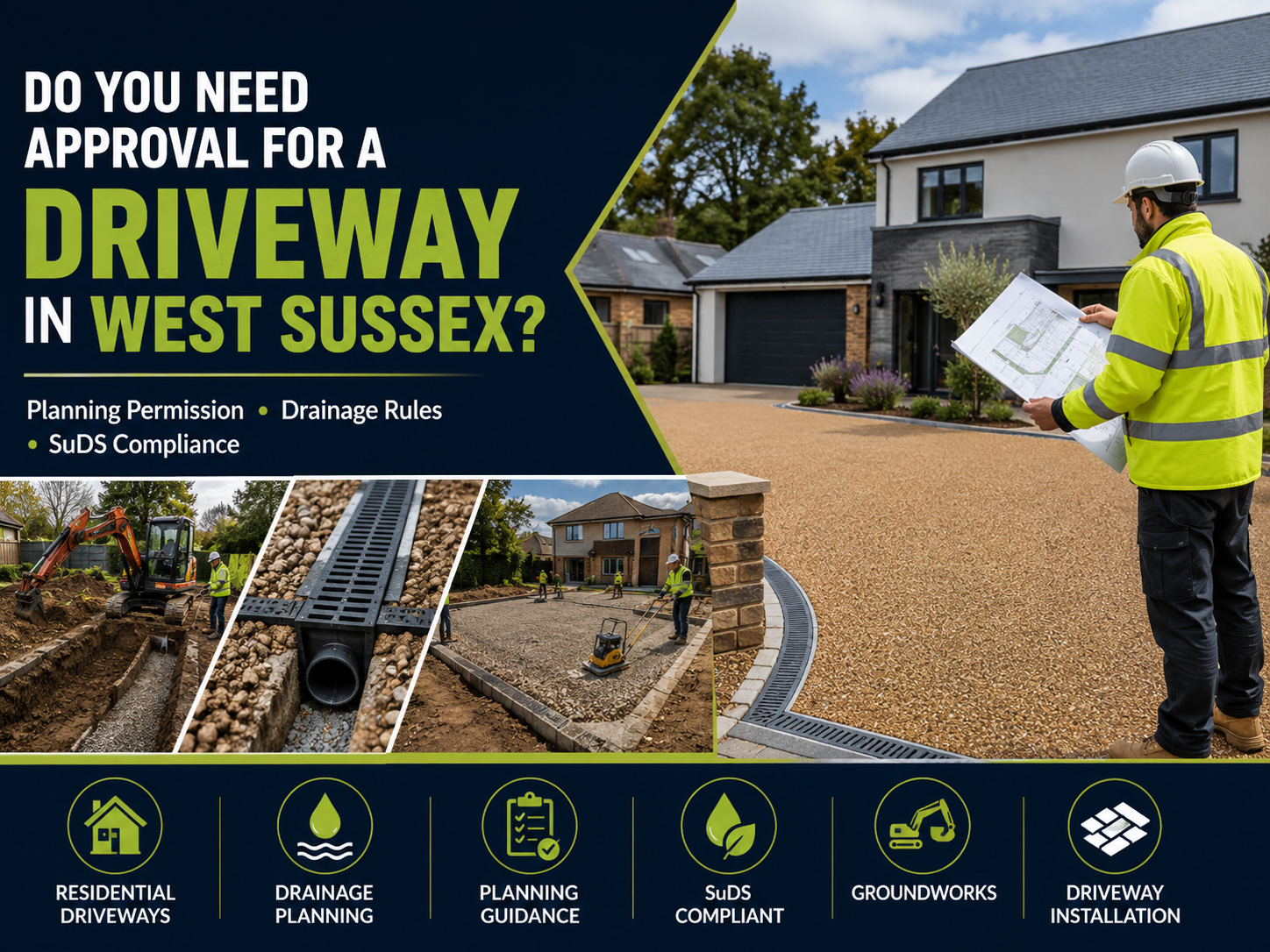
One of the most common questions homeowners ask before installing a new driveway is simple.
Do I need planning permission?
The answer is not always straightforward. In many cases, you may not need permission. But there are important rules around drainage, materials, and surface water that must be followed.
Ignoring these requirements can lead to fines, enforcement action, or having to redo the work.
Batten Civil Engineering Ltd regularly advises homeowners across Henfield, Hove, and surrounding West Sussex areas on how to plan driveway projects correctly and stay compliant from the start.
When Planning Permission Is Not Required
In most residential cases, planning permission is not needed if certain conditions are met.
The key factor is how water is managed.
You usually do not need permission if:
- The driveway uses permeable materials
- Water drains naturally into the ground
- Proper drainage systems are installed
- The surface does not increase flood risk
This is why materials like resin-bound surfaces or gravel are often preferred, as they allow water to pass through rather than run off.
When Planning Permission May Be Required
Planning permission is more likely to be needed when drainage is not properly managed.
You may need approval if:
- The driveway is non-permeable (such as traditional concrete)
- Water runs onto public roads or pavements
- Drainage systems are not included
- The property is in a conservation area
For official UK planning guidance, you can refer to Planning Practice Guidance (UK Government).
In these situations, working with experienced contractors like Batten Civil Engineering Ltd can help ensure the correct design is in place before any work begins.
Why Drainage Regulations Are So Important
The main reason for driveway regulations is to prevent flooding.
When water cannot drain properly, it flows into roads, pavements, and drainage systems that may already be under pressure.
Over time, this can lead to:
- Surface water flooding
- Damage to nearby infrastructure
- Increased strain on public drainage systems
To understand more about drainage responsibility in the UK, see Sustainable Drainage Systems (SuDS) overview.
What Are SuDS and Why They Matter
Sustainable Drainage Systems (SuDS) are designed to manage water in a more natural way.
Instead of directing water into drains, they allow it to soak into the ground or be controlled on-site.
| Solution | How It Works | Suitable For |
| Resin-bound surfaces | Permeable finish allows water through | Residential driveways |
| Gravel driveways | Natural drainage through gaps | Rural properties |
| Soakaways | Underground systems that absorb water | Larger areas |
| Drainage channels | Direct water to safe areas | Sloped driveways |
More technical guidance on SuDS can be found here: Flood and Water Management Act 2010.
Local Considerations in West Sussex
Planning requirements can vary depending on location.
In West Sussex, factors such as soil type, rainfall, and property layout all influence how drainage must be handled.
For example:
Clay-heavy areas like Henfield may require additional drainage solutions because water does not absorb easily.
Coastal areas such as Hove may need more controlled drainage due to higher moisture levels and runoff.
How Professional Contractors Help You Stay Compliant
Understanding regulations can be confusing, especially if you are not familiar with planning rules.
A professional contractor will:
- Assess whether planning permission is required
- Design drainage systems that meet regulations
- Recommend suitable materials
- Ensure water flow is properly managed
What Happens If You Ignore Regulations
Skipping planning requirements or drainage rules can lead to serious problems.
- Being asked to remove or alter the driveway
- Fines or enforcement notices
- Long-term drainage and flooding issues
Do All Driveways Need to Follow These Rules?
Yes. Even if planning permission is not required, drainage regulations still apply.
Driveway Planning and Installation in West Sussex
Batten Civil Engineering Ltd provides driveway installation, groundwork, and drainage solutions across:
- Henfield
- Hove
- Surrounding West Sussex areas
- Residential and commercial properties
Conclusion
Planning permission for driveways in West Sussex depends largely on how water is managed.
In many cases, permission is not required, but drainage regulations must always be followed.
Ignoring these rules can lead to costly problems, both legally and structurally.
By understanding the requirements and working with experienced contractors like Batten Civil Engineering Ltd, you can ensure your driveway is compliant, durable, and built to last.
Frequently Asked Questions
Do I need planning permission for a driveway in West Sussex?
Not always. Permission is usually not required if the driveway is permeable or includes proper drainage.
What is a permeable driveway?
A permeable driveway allows water to pass through the surface and drain naturally into the ground.
Can I install a driveway without drainage?
No. Proper drainage is required to prevent flooding and comply with regulations.
What happens if my driveway is not compliant?
You may face enforcement action or be required to make changes.
Does resin require planning permission?
Usually no, as resin-bound surfaces are permeable and meet drainage requirements.
Share